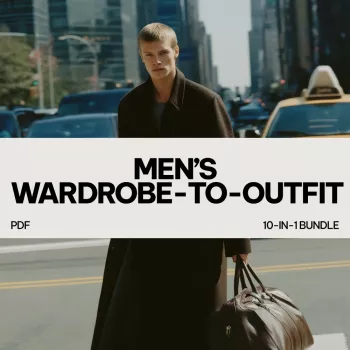
Men’s Wardrobe-to-Outfit Toolkit: A 10-in-1 System for Building Sharp Outfits From What You Own
A good wardrobe isn’t about owning more—it’s about knowing what works, what fits, and how to turn basics into reliable outfits for real life. Our Men’s Wardrobe-to-Outfit Toolkit is built as a step-by-step system: clear guides, practical eBooks, and checklists that move from closet cleanup to repeatable outfit formulas. The goal is simple: you get dressed faster, look more intentional, and stop second-guessing every purchase. For more guidance, see Historical Resources – Fashion Industry.
What this toolkit is designed to fix
If your closet is full but your outfits feel inconsistent, you’re not alone. Our team built this toolkit to solve the most common friction points that keep men stuck in a loop of “almost working” clothes. For further reading, see Business Attire Guide.
- Closets full of clothing but “nothing to wear” because items don’t coordinate
- Inconsistent fit (shirts too long, pants too tight, jackets that don’t frame the shoulders)
- Overbuying trend pieces instead of building a dependable foundation
- Outfits that look fine in isolation but feel off for the occasion
- Decision fatigue: too many options, not enough go-to combinations
What’s inside the 10-in-1 bundle (how each piece earns its spot)
This bundle is organized like a workflow, not a pile of style tips. You’ll get:
- Guides that clarify the building blocks: fit, proportions, fabric weight, and color coordination
- eBooks that turn principles into action: wardrobe planning, outfit building, and shopping rules that prevent regret
- Checklists that keep momentum: closet audit steps, outfit formulas to try, and a purchase filter to stop “almost right” items from entering the rotation
- A repeatable workflow: assess what’s owned, define gaps, fill gaps deliberately, and then rotate outfits with confidence
- Built for practical use: scan a checklist before shopping, reference outfit formulas before events, and keep key rules handy when getting dressed
Toolkit workflow: from closet to outfits
| Stage | What to do | Outcome |
|---|---|---|
| 1) Closet audit | Separate keep / tailor / donate; identify duplicates and weak links | A leaner wardrobe with clearer options |
| 2) Foundation build | Lock in essentials that fit and coordinate | More outfits from fewer pieces |
| 3) Outfit formulas | Use preset combinations for work, casual, and smart evenings | Reliable looks on demand |
| 4) Gap shopping | Buy only items that pass the checklist filters | Fewer wasted purchases |
| 5) Maintenance | Care, rotation, and seasonal review | Clothes last longer and look better |
How to use it in the first 30 minutes (quick-start plan)
You don’t need a full weekend to get traction. Here’s a fast start that creates immediate clarity without triggering a shopping spree.
- Pick one goal: “work-ready,” “weekend upgrade,” or “date/event ready” so the closet audit stays focused
- Do a fast fit check on core items (pants, jeans, tees, button-downs, a jacket): anything that consistently feels wrong goes into a “tailor/replace” pile
- Choose a core color lane (neutral base + one accent) to make mixing easier immediately
- Select 2–3 outfit formulas and build them with what you already own before buying anything new
- Create a short shopping list limited to true gaps (items needed to complete multiple outfits, not single-use pieces)
Outfit formulas that create instant consistency
The toolkit emphasizes combinations you can repeat, not one-off “perfect” outfits. When you think in formulas, your wardrobe gets simpler: a few interchangeable tops, bottoms, and layers create dozens of looks.
- Start with fit and footwear—then adjust formality with layers (overshirt, blazer, coat) rather than buying entire new outfits
- Use contrast with intention: pair light top/dark bottom or keep tonal outfits within the same family for a cleaner silhouette
- Keep accessories minimal and purposeful: belt/shoes aligned, watch kept simple, and one optional finishing layer (jacket or knit)
Occasion-to-outfit toolkit: dependable formulas
| Occasion | Base pieces | Upgrade lever |
|---|---|---|
| Work (business casual) | Oxford or clean knit + chinos + leather shoes | Add blazer or structured jacket |
| Weekend clean casual | Well-fitting tee + dark jeans + minimal sneakers | Add overshirt or bomber |
| Dinner / date | Button-down or fine knit + tailored pants + boots/loafers | Add coat and sharper watch/belt |
| Warm-weather smart | Polo or linen shirt + lightweight trousers + loafers | Add unstructured layer (light jacket) |
The purchase filter: buy fewer things, wear more outfits
Shopping gets easier when you stop asking, “Do I like it?” and start asking, “Will I actually wear it?” Our checklists walk you through four fast rules that protect your budget and your closet space.
Who this toolkit fits best (and how it helps)
Make the toolkit stick: turn style into a simple routine
In-stock picks from our store
- Men’s Wardrobe-to-Outfit Toolkit: 10-in-1 Bundle of Guides, eBooks & Checklists for Stylish Men
- Long-Term Growth: Build Habits That Last (useful if you want the wardrobe routine to become automatic)
Trusted style references (optional reading)
- Esquire Style
- GQ Style
FAQ
Is this toolkit better for beginners or men who already dress well?
It works for both: if you’re new, you get step-by-step structure; if you already dress well, you get checklists, gap analysis, and outfit formulas that tighten consistency and reduce wasted buys.
How quickly can results show up after using the guides and checklists?
You can see immediate improvement the same day by doing a quick closet audit and building 2–3 outfit formulas from what you own. Deeper results typically show up after targeted gap-shopping and a couple of simple tailoring fixes.
Does it help with choosing what to buy next without overhauling everything?
Yes—our purchase filter keeps you focused on fit, versatility, real-life occasions, and avoiding duplicates. The goal is upgrading essentials first and making sure each new item creates multiple complete outfits.