It is frustrating to find tender seedlings chewed down or the leaves of a favorite flower full of holes. Snails may be responsible, but the damage alone does not tell the whole story. We recommend looking for the culprit first, then protecting vulnerable plants and making nearby hiding places less appealing.
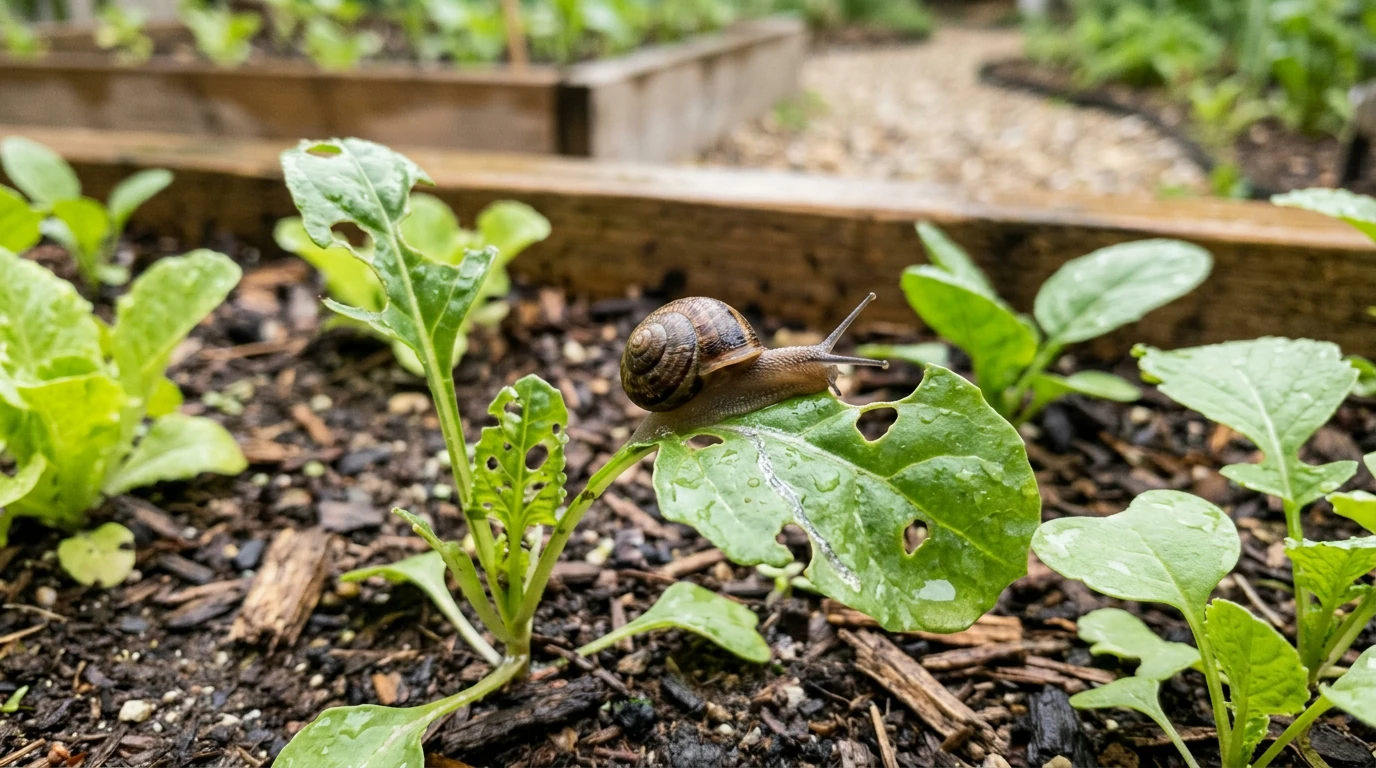
Snails often feed on tender growth, leaving irregular holes in leaves or ragged edges around them. Seedlings, leafy vegetables, and flowers can be particularly vulnerable. A small seedling may lose enough foliage to struggle, while an established plant might show only a few cosmetic blemishes.
Look for shiny, silvery slime trails on leaves, soil, paths, and containers. Trails are useful clues, but they do not always mean a snail is still nearby. Inspect damaged plants after dark with a flashlight or check early in the morning, especially after damp weather.
Other pests can make holes and ragged edges, too. Before deciding how to respond, look for snails on the plants and in sheltered spots nearby. The University of California’s guide to snails and slugs offers additional identification and management information.
| Clue | What to look for | Next step |
|---|---|---|
| Leaf damage | Irregular holes or ragged edges | Inspect damaged plants after dark |
| Slime trails | Shiny tracks on leaves, soil, or pots | Follow trails toward sheltered hiding places |
| Sheltered spots | Snails beneath pots, boards, or dense foliage | Remove snails and reduce unnecessary cover |
Start with plants that have the least foliage to spare. Newly planted seedlings, young leafy crops, and tender flowers deserve frequent checks during damp weather. Look underneath leaves as well as around the base of each plant; a snail feeding at night may retreat before you visit the garden in the afternoon.
Hand-picking can help when you find only a few snails or need to protect a small area. Visit in the evening or early morning, collect the snails you find, and dispose of them according to local guidance. Gloves or tongs can make the job more comfortable.
Return for several inspections rather than assuming one round is enough. New snails may move in from nearby cover, and small ones can be easy to miss. Keep a simple note of where you find them so you can focus your next check.
Copper tape can be an option around suitable pots or raised containers. Apply it as a continuous band to a clean, dry surface, and keep leaves, stakes, and other objects from creating bridges over it. Remove snails already inside the protected area before relying on the barrier.
Results depend on installation and upkeep, so inspect the tape for gaps and debris. A barrier is not a substitute for checking plants, particularly when foliage touches neighboring vegetation.
Snails shelter in cool, moist places during the day. Near vulnerable beds, remove unnecessary boards, overturned pots, and excess debris. Lift containers occasionally to check underneath, and thin dense foliage where appropriate to make inspections easier.
You do not need to strip the whole garden bare. Retain habitat elsewhere for beneficial wildlife, and concentrate cleanup where snails are damaging plants. The Royal Horticultural Society’s advice on slugs and snails also discusses managing them as part of a garden ecosystem.
When practical, water in the morning so the soil surface has time to dry before evening. Give plants the water they need rather than withholding it to deter snails. After changing your routine, keep checking for fresh damage and live snails; repeated observation is more useful than relying on a single treatment.
Remove badly damaged leaves when appropriate, especially if they are deteriorating, but leave enough healthy foliage to support growth. Many established plants can recover when their growing points remain intact. Give them suitable water and soil care, and watch for healthy new growth.
Seedlings have fewer reserves. If a seedling has been eaten down to the growing point or fails to produce new growth, replacing it may be the practical choice. Protect the replacement from the start and check it closely during damp evenings.
For a practical resource you can return to as you assess damage and protect vegetables and flowers, our Understanding and Managing Snail Damage in Your Garden guide is listed at $2.99.
Our team also offers Long-Term Growth: Build Habits That Last, a separate productivity guide for readers interested in building routines beyond the garden.
Before choosing, compare the product details with your daily routine, available space, care needs, and preferred setup. The strongest option is usually the one that fits the intended use clearly and remains simple to clean, store, and check before repeat use.
Look for irregular holes, ragged edges, and slime trails, then inspect the plants and nearby hiding places after dark or early in the morning.
Many established plants can recover if their growing points remain healthy. Severely damaged seedlings may need to be replaced.
Look after dark or early in the morning, especially when conditions are damp.





Leave a comment