Short-term thinking focuses on what you need or gain now. Long-term thinking considers how today’s choices may affect your goals, resources, and well-being months or years from now. Both have a place: you need to handle immediate demands while making room for a future you want.
The difference is not simply how far ahead you plan. It also involves how you weigh trade-offs, respond to setbacks, and define progress. Our team uses both perspectives when making decisions: immediate needs matter, but so do choices that remain useful over time.
Short-term thinking prioritizes the next deadline, purchase, or problem. For example, you might choose the quickest way to organize a crowded room before guests arrive. Long-term thinking asks whether that solution will keep the space workable after the visit.
A short-term choice may deliver convenience or savings right away, even if it creates more work later. A long-term choice may require more time, patience, or money upfront in exchange for lasting value. Neither is automatically better; the right choice depends on your needs and available resources.
When you focus on the near term, a setback can feel like a reason to abandon a plan. A longer view makes it easier to treat setbacks as information, adjust your approach, and continue toward a goal. That does not mean ignoring urgent problems; it means addressing them without losing sight of what comes next.
Start by naming the decision you face and the outcome you need now. Then ask what effect your choice might have later. If you are buying something for your home, for instance, consider not only the price and appearance but also how you will use it, maintain it, and make space for it over time.
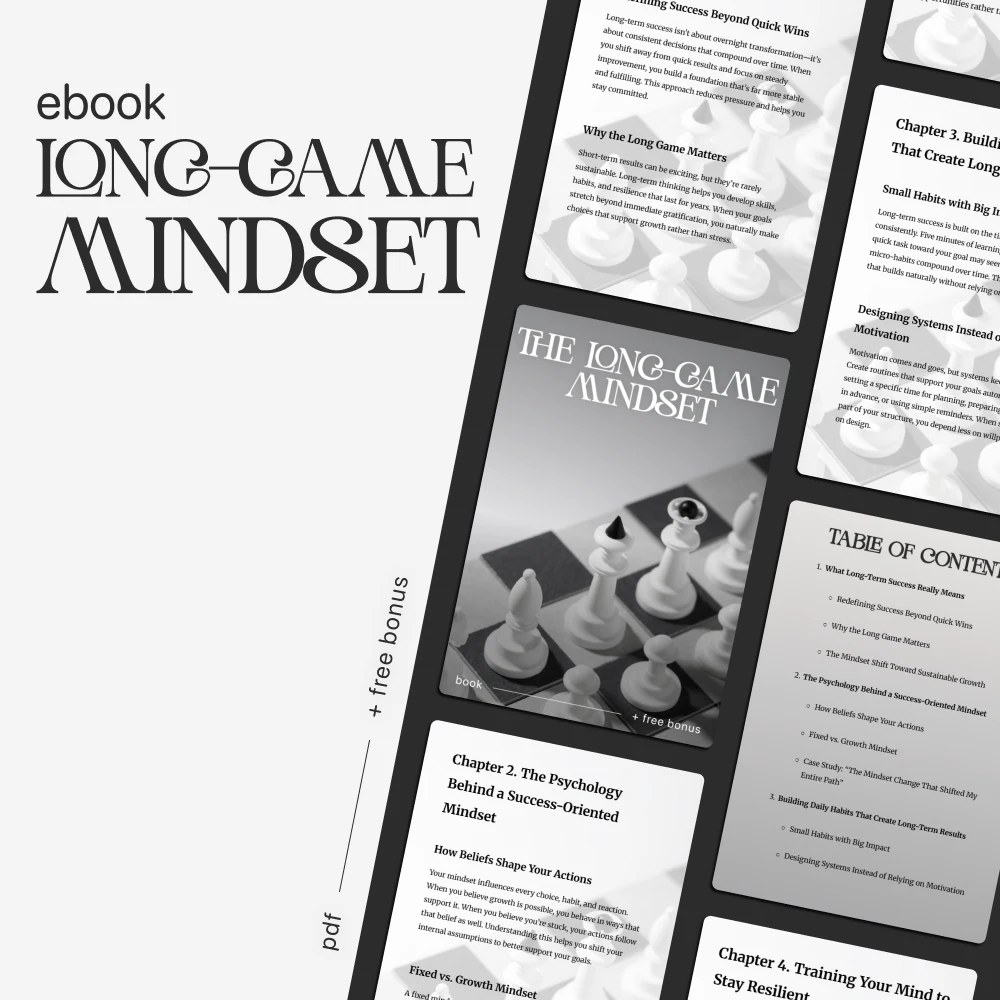
Small, repeatable actions can support a long-term goal without making your daily life harder. Set a manageable budget, revisit your priorities as circumstances change, and leave room for practical short-term fixes. For more ways to build a durable outlook, explore our guide to the long-game mindset.
Break your goal into smaller actions and track the steps you complete, not just the final result. Reviewing your progress regularly can help you recognize improvement and adjust your plan when needed.






Leave a comment