A good practice or game starts before you step onto the playing surface. Packing the right equipment, checking its condition, and talking through concerns can make preparation easier for everyone involved. Our printable digital checklist gives athletes, parents, and coaches a practical way to keep those steps in mind.
Safety is a shared routine, not a single piece of equipment. Whether you play, help a child prepare, or lead a team, a few consistent checks can help you arrive ready to participate.
Busy schedules make it easy to overlook a loose strap or forget to mention a sore ankle. A repeatable pre-activity check gives you a moment to notice those details before practice or competition begins. It also helps adults and athletes understand who is responsible for each part of preparation.
There is no universal gear list for every athlete. Equipment needs depend on the sport, the athlete’s age, the level of play, and the rules that apply. A soccer player’s footwear needs differ from those of a basketball player, while contact sports may call for additional protective equipment.
A checklist supports preparation; it cannot prevent every injury. Pair it with sound coaching, attention to conditions, and prompt action when someone reports a problem.
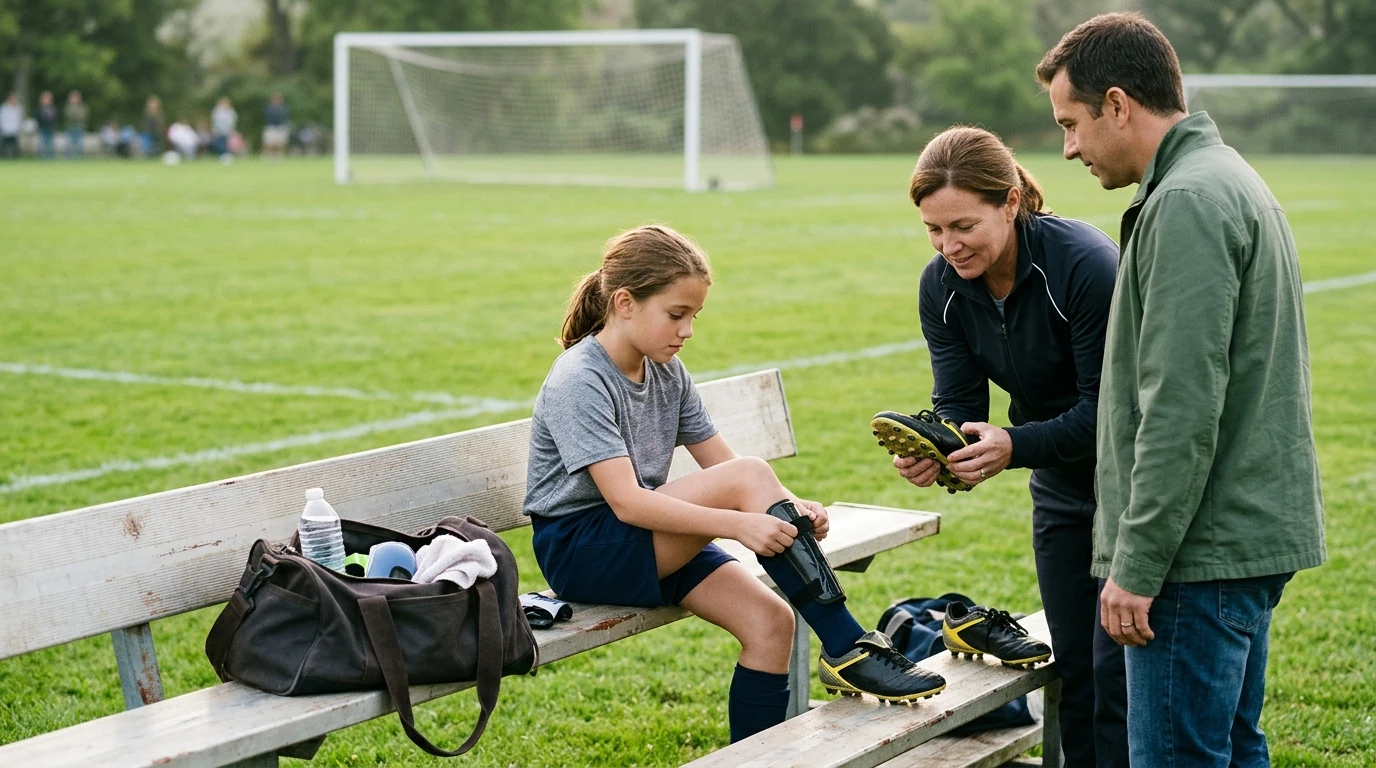
Start with equipment required or recommended for the specific activity. Depending on the sport, that may include a helmet, mouthguard, pads, eye protection, or other protective items. Use gear intended for the activity rather than assuming that equipment designed for another sport offers the same protection.
Check that each item fits securely and can be worn as directed without interfering with movement. Look for cracks, frayed straps, broken fasteners, or other obvious damage. If something is damaged, replace it rather than relying on a quick fix. Follow the manufacturer’s care and replacement instructions, along with the rules and equipment guidance for your sport.
| Check | What to look for | Next step |
|---|---|---|
| Protective equipment | Appropriate gear that fits securely and shows no obvious damage | Adjust or replace as needed |
| Footwear | A suitable fit and grip for the playing surface | Replace worn or unsuitable shoes |
| Clothing | Comfortable, activity-appropriate clothing | Adjust for the activity and conditions |
Footwear and clothing deserve attention, too. Shoes suited to the surface can help you move as intended, while clothing should allow comfortable movement and suit the conditions. Make sure any accessories comply with the sport’s rules.
Athletes can take an active role by inspecting their gear, noticing changes in fit, and telling a coach or parent about discomfort, damage, or symptoms. Speaking up before play is more useful than trying to push through a problem.
Parents can help younger athletes pack and learn what each item is for. Share relevant health information with coaches, including information that may affect participation or an emergency response. Agree on how the coach can reach you if a concern comes up.
Coaches can review equipment rules, inspect the playing area, and make sure participants understand when to report a problem. Before activities begin, review emergency procedures and make sure responsible adults know how to get help.
We offer Your Sport Safety Checklist as a printable digital resource for keeping a preparation routine close at hand. It is listed at $5.99.
Review your checklist while packing, when you have time to find missing items or replace damaged ones. Then take another look at the venue: weather may have changed, the playing surface may be different from usual, or a piece of equipment may need adjustment after travel. Adapt your routine to the sport and the people involved.
If you also want to work on making routines more consistent beyond sports, our Long-Term Growth: Build Habits That Last digital guide offers a separate focus on long-term habits.
Bring water and plan opportunities to drink around activity. Choose a warm-up appropriate for the sport and the athlete, and pay attention to heat, storms, poor air quality, or other conditions that could make participation unsafe. Coaches and organizers should be prepared to adjust, pause, or stop activities when conditions warrant it.
Have a clear injury-response plan before play: know who will provide assistance, how to contact emergency services, and how to reach a parent or guardian when needed. An athlete with concerning symptoms should stop participating and receive appropriate evaluation. For a suspected concussion, remove the athlete from play and follow qualified medical guidance before returning. The CDC’s HEADS UP concussion guidance explains why prompt recognition matters.
Follow advice from qualified medical professionals and the safety guidance of your sport’s governing organization. The American Academy of Pediatrics’ sports safety guidance is another resource for families preparing young athletes to play.
Athletes, parents, and coaches can use a shared checklist to support preparation. Adapt it to the sport and each person’s responsibilities.
Check gear briefly before each practice or game. Follow manufacturer and sport-specific guidance for maintenance and replacement.
No. Appropriate, well-fitted gear can reduce some risks, but it cannot eliminate injuries; safe practices and prompt attention to symptoms matter too.




Leave a comment