When you suspect your child is dealing with bullying, it can be hard to know what to say first. You do not need a perfect script. Regular conversations, a calm response, and a plan for finding help can show your child that they are not alone.
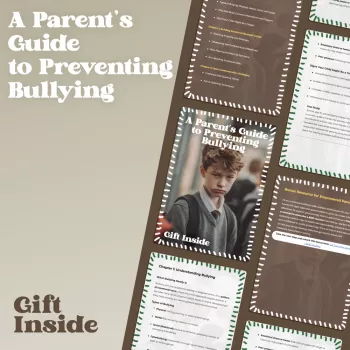
We offer A Parent’s Guide to Preventing Bullying for parents seeking practical guidance on prevention and confidence. Alongside the guide, these everyday steps can help you build trust and respond when concerns arise.
Brief check-ins can make it easier for your child to share concerns before a situation grows. Ask about friendships, school, activities, and online interactions during a walk or another relaxed moment. Questions such as “Who did you spend time with today?” or “What was the hardest part of your day?” leave room for more than a yes-or-no answer.
If your child shares something upsetting, listen without blame. Try not to interrupt with solutions or press for every detail immediately. Thank them for telling you, and ask what would help them feel supported. You can return to the conversation later if they need time.
Be clear about one point: A child is never responsible for being bullied. What they wear, how they respond, or whether they feel confident does not excuse another person’s harmful behavior.
Changes in mood, reluctance to attend school, or withdrawal from friends can be reasons to check in. These changes have many possible causes, so treat them as invitations to listen rather than proof of bullying.
Bullying generally involves unwanted aggressive behavior, a real or perceived power imbalance, and repetition or the likelihood that the behavior will be repeated. The power imbalance may involve physical strength, access to embarrassing information, or social influence. You can learn more from StopBullying.gov’s explanation of bullying.
Use the observations below to begin a supportive conversation, not to diagnose what is happening.
| What a parent might notice | A supportive next step |
|---|---|
| Reluctance to go to school | Ask open-ended questions and listen without rushing to conclusions. |
| Sudden withdrawal from friends | Check in privately and make time for a comfortable conversation. |
| Distress after using a device | Ask about online interactions and preserve concerning messages if appropriate. |
If your child is not ready to talk, let them know you are available. Consider whether another trusted adult, such as a counselor, relative, or coach, might be easier for them to approach.
Practicing a few simple phrases can give your child options without putting the burden of stopping bullying on them. Depending on the situation, they might say “Stop,” “That’s not okay,” or “I’m going to get help.” Role-play briefly and let your child choose words that feel natural.
Make a list together of trusted adults at school, at activities, and at home. Talk through how your child can reach one of them, including what to do if the first adult is unavailable. Remind your child that asking for help is not a failure.
Friendships and activities can also help children feel connected and capable. A club, team, creative activity, or one-on-one time with a supportive friend may give your child a welcome sense of belonging. Let their interests guide the choice rather than treating an activity as a cure.
Never expect a child to confront someone when doing so feels unsafe. Leaving the situation and finding an adult can be the safest response. For more ideas, see StopBullying.gov’s prevention guidance.
Write down what your child reports, including dates, locations, people involved, and any steps already taken. Save relevant messages or screenshots when appropriate. Share specific concerns with the appropriate school staff member, such as a teacher, counselor, or administrator, rather than expecting your child to resolve the problem alone.
Ask how the school will help keep your child safe and how you can report further incidents. Agree on practical steps and a date to follow up. In the meantime, keep checking in with your child: a plan is more useful when it reflects what they are experiencing day to day.
If your child is in imminent danger, seek immediate help from emergency services.
Our eBook is a practical resource for parents interested in preventing bullying and helping children build confidence. It is listed at $15.99; visit the product page for current purchase details. Our team invites you to explore it alongside ongoing conversations with your child and school staff.
If you are also interested in establishing routines more generally, our Long-Term Growth: Build Habits That Last digital guide is a separate resource on productivity and lasting habits, not a substitute for bullying-specific support.
Keep conversations open, encourage supportive relationships, practice safe responses, and cooperate with school staff. These steps can help, although no approach guarantees prevention.
Listen calmly and reassure your child that the bullying is not their fault. Document what happened and contact the appropriate school staff to make a safety plan.
Confidence can help children practice responses and seek support, but it does not guarantee that bullying will stop. A child is not responsible for preventing someone else’s behavior.






Leave a comment