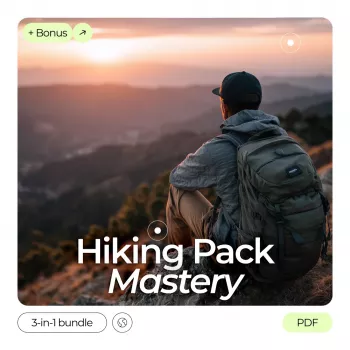
A well-packed backpack should help you move comfortably, keep your load balanced, and put essentials within reach. The best arrangement depends on where you’re going and what you need to carry, but a few packing habits can make almost any hike easier to manage. For more guidance, see Packing for the Camino de Santiago –.
Our Master the Art of the Perfect Hiking Pack guide bundle is an option if you want guidance as you prepare. Start with the route, then build and adjust your load around the conditions you expect. For further reading, see Backpacking Courses: Multi-Week Wilderness Expeditions.
Before you fill your pack, consider the distance, terrain, forecast, and length of your trip. A short hike on a familiar trail may call for a different load than a remote overnight trip. Check where water is available and whether you’ll need a way to treat it before drinking.
Our team recommends gathering your essentials before deciding where each item belongs. Your list should cover:
Check local trail conditions and regulations before leaving. Tell someone where you’re going and when you expect to return, and make sure you know what to do if your plans change.
Lay your gear out so you can see what you’re carrying. Place bulky, lighter items low in the pack, then position heavier gear near the middle and close to your back. Keeping substantial weight near your body can make the load feel more manageable than placing it far from your back.
Use softer items to fill gaps around firmer gear and reduce shifting. Check the pack from side to side, too: a full bottle on one side and an empty pocket on the other can make the load feel uneven. The goal is a stable pack, not a tightly stuffed one that makes essentials difficult to find.
| Pack area | What to put there | Why |
|---|---|---|
| Bottom | Bulky, lighter items | Creates a stable base |
| Middle, close to your back | Heavier gear | Keeps weight near your body |
| Top and outer pockets | Rain layer, snacks, and navigation tools | Makes essentials easier to reach |
| Side pockets | Water bottles or other balanced items | Keeps useful items accessible |
For another look at organizing a load, see REI’s backpack-packing guidance. Adjust the general layout to your pack’s design and the gear you’re carrying.
A rain cover can help shield a pack, but it may not keep moisture out completely. Use a pack liner or waterproof bags for items that need to stay dry, such as spare clothing and a sleeping bag. Close each liner or bag securely before packing it.
Place your map, headlamp, first-aid supplies, and rain protection where you can reach them without emptying the main compartment. Keep water and snacks accessible as well. If the forecast calls for changing weather, putting your rain layer near the top can save time when conditions shift.
Food storage rules vary by location. Separate food and toiletries as required by local wildlife regulations, and carry any required storage container. Make room for that container when planning your load rather than trying to squeeze it in at the last minute.
Fit your pack after loading it. Loosen the straps, put the pack on, and position the hip belt over your hips before tightening it. Then adjust the shoulder straps and any other available straps until the pack feels secure without pinching or restricting your movement.
Take a short practice walk, ideally on terrain that resembles part of your route. Notice whether the load shifts, pulls backward, or creates pressure points. If it does, readjust the straps and repack items that move around. Remove nonessential weight if the pack still feels uncomfortable, while keeping the supplies your hike requires.
A repeatable preparation routine can also help you remember these checks. For a broader approach to building routines, our Long-Term Growth: Build Habits That Last guide covers habit-building beyond the trail.
Our Master the Art of the Perfect Hiking Pack guide bundle is a resource for hikers who want help preparing their backpacks. The listed price is $308.99 USD; visit the product page for current purchase details.
Whatever guide or packing system you use, revisit your choices for each hike. Weather, distance, water access, and local requirements can change what belongs in your pack—and what needs to be easiest to reach.
Place heavier items near the middle of the pack and close to your back. Balance the load from side to side and fill gaps to limit shifting.
Keep water, snacks, navigation tools, rain protection, and other frequently needed essentials accessible. A headlamp and first-aid supplies should also be easy to find.
Adjust the hip belt and shoulder straps with the pack loaded, then take a short walk. Check for discomfort, restricted movement, or shifting, and make adjustments as needed.






Leave a comment