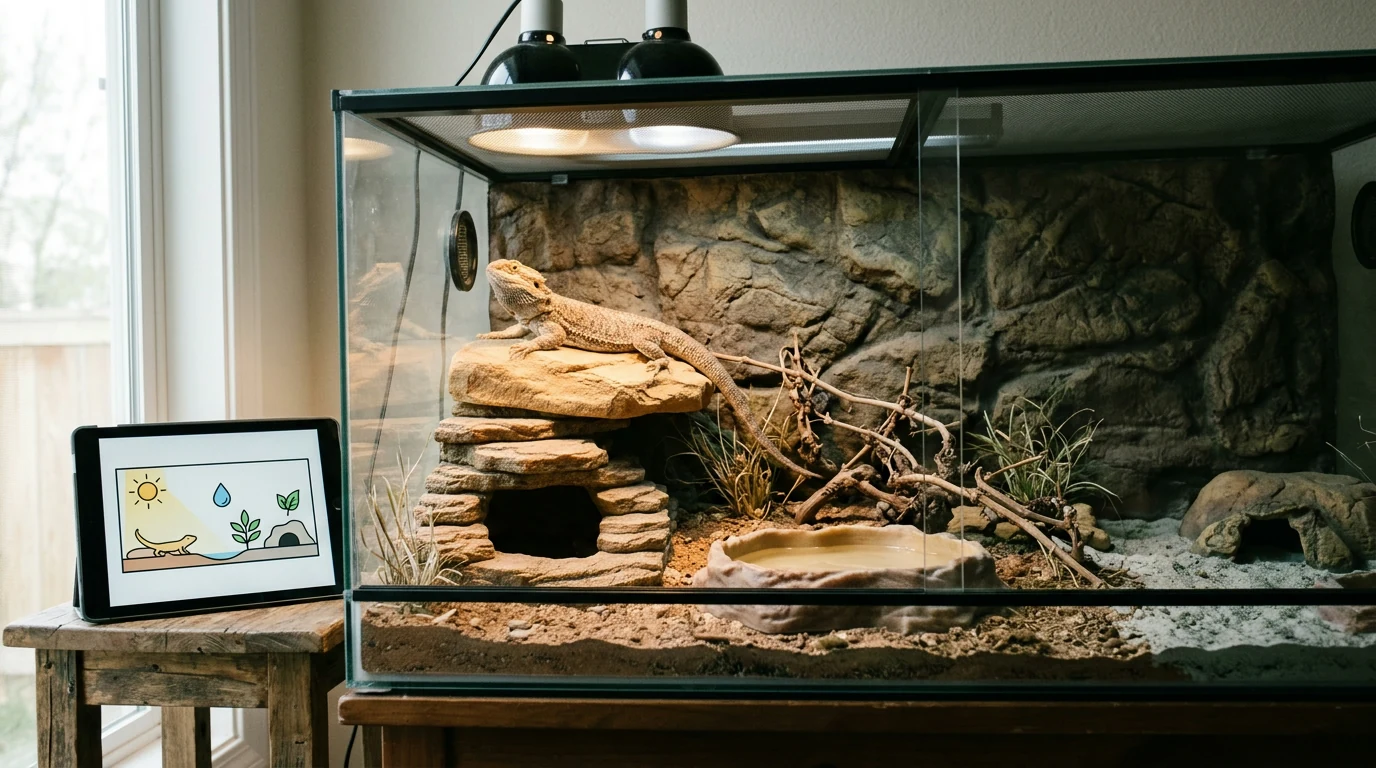
Good reptile care begins with a simple idea: your pet’s routine should fit its species. A comfortable enclosure, suitable food, careful observation, and veterinary support all work together to support a healthy life. Whether you are welcoming your first reptile or revisiting an established setup, our guide can help you organize the essentials and identify questions to discuss with a reptile-experienced veterinarian.
A desert-dwelling lizard and a tropical snake may need very different environments. Temperature, humidity, lighting, enclosure space, and diet also can change with age and life stage. Before buying equipment or choosing food, identify your reptile’s species and learn about its adult size and natural habits.
Ask a reptile-experienced veterinarian to help you evaluate your setup and establish a care plan. Our Essential Reptile Care eBook is a $10.99 resource covering habitat, feeding, and health basics for both new and experienced owners. Use its general guidance alongside recommendations tailored to your pet.
Choose a secure enclosure with enough room for your reptile to move and behave naturally. Depending on the species, that may mean space to climb, burrow, bask, or explore. Provide suitable hiding places so your pet can retreat from view, and choose a substrate appropriate for its habits and care needs.
Most reptiles rely on their surroundings to regulate body temperature. Set up a temperature gradient with warmer and cooler areas so your pet can move between them. Measure conditions with thermometers placed in the relevant areas rather than estimating by touch. Monitor humidity as well, using a hygrometer and adjusting the enclosure to suit the species.
Lighting requirements differ, including whether and how much UVB a reptile needs. Follow species-specific guidance and the equipment manufacturer’s instructions for placement and replacement. Secure heating equipment to reduce the risk of burns or escape, and discuss the setup with your veterinarian if you are unsure.
| Care area | What to check |
|---|---|
| Temperature | Warm and cool areas match the species’ needs |
| Humidity | Levels suit the species and are monitored |
| Lighting | Light and UVB provision suit the species |
| Enclosure | Space is secure, clean, and furnished with suitable hiding places |
The Merck Veterinary Manual’s reptile management guidance provides additional background on the connection between husbandry and health.
Reptiles may be herbivores, insectivores, carnivores, or omnivores. A food that suits one species may be inappropriate for another, so start with a species-specific diet rather than a general reptile menu. Age matters too: a growing animal may need a different feeding schedule or food selection than an adult.
Offer food in sizes appropriate for your pet and provide fresh water according to its needs. Clean water containers regularly, even if your reptile does not appear to drink often. Ask your veterinarian about suitable portions and feeding frequency, especially if your pet is growing, underweight, or changing its eating habits.
Supplements also deserve individual attention. Calcium and other nutrients can be important for some reptiles, but the right regimen depends on diet, species, lighting, and other factors. Ask a reptile-experienced veterinarian before assuming that every animal needs the same supplement or schedule.
Spend a few minutes observing your reptile regularly. Note its appetite, activity, shedding, and droppings, and learn what is typical for that individual. A brief written record can help you notice a gradual change and give your veterinarian useful information.
Contact a reptile-experienced veterinarian about concerning changes, including breathing difficulty or persistent loss of appetite. Breathing difficulty warrants prompt attention. Avoid waiting for several symptoms to appear before asking for advice.
Reptiles and their environments can carry germs even when the animals look healthy. Wash your hands with soap and water after handling your pet or enclosure items, and keep reptile equipment away from food-preparation areas. For more hygiene guidance, see the CDC’s reptiles and amphibians resource.
A simple schedule makes daily care easier to manage. Check temperatures, humidity, and water each day; feed on the schedule suited to your pet; and remove waste promptly. Set reminders for deeper cleaning and equipment maintenance, and record changes you want to discuss with your veterinarian.
Our team offers Essential Reptile Care as a starting point when you are building or revisiting that routine. You can explore the eBook on its product page. If you also enjoy photographing animals outdoors, our Landscape Photography Basics for Beginners digital guide is a separate resource for developing your outdoor photography skills.
Yes. The eBook is intended for beginner and experienced owners. Pair its general guidance with advice specific to your reptile’s species.
No. Requirements vary by species and life stage, so confirm the temperature, humidity, lighting, and dietary needs of your particular pet.
Contact a reptile-experienced veterinarian when you notice concerning changes, such as breathing difficulty or persistent loss of appetite. Breathing difficulty warrants prompt attention.







Leave a comment