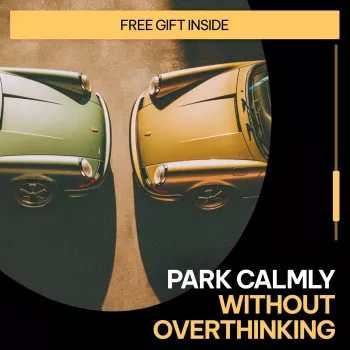
Parking can turn an ordinary trip into a tense moment. A narrow space, a car waiting behind you, or the thought of having to try again can make a simple maneuver feel much bigger than it is. You do not have to master every situation at once.
We offer Park Calmly Without Overthinking for $4.99 as a gentle starting point for building parking confidence and calmer habits. Alongside a manageable practice routine, it can help you approach the subject without putting pressure on yourself to be perfect.
Parking asks you to pay attention to several things at once: the edges of a space, nearby vehicles, pedestrians, and the direction your car is moving. Add traffic behind you or an unfamiliar lot, and it is understandable to feel rushed.
Give yourself permission to assess a space before committing to it. If it looks too tight, visibility is poor, or you cannot approach it safely, another spot may be a better choice. Parking farther from the entrance can also give you more room and less traffic to manage.
Taking extra time is not a sign that you have failed. A careful decision, including deciding not to use a space, is part of responsible driving.
Start somewhere quiet and open, where you have room to become familiar with your car’s movements. Before you begin, adjust your seat and mirrors so you can see as well as possible. Look around the vehicle and continue checking for people, cars, and obstacles as you move.
Drive slowly enough to give yourself time to respond, and follow local traffic signs and rules. Mirrors and parking cameras can help, but they do not replace looking around and checking areas they may not show.
If your approach is not working, stop safely and reassess. Repositioning is a normal part of parking, not a mistake you need to hide. When you finish, check that your vehicle is within the space and does not obstruct traffic or walkways. If you need to adjust and can do so safely, take your time.
Short sessions can be more manageable than trying to practice every possible maneuver in one day. You might begin with pulling into open spaces and add backing or parallel parking only when you are ready to focus on those skills.
A gradual progression gives you a way to choose your next step without setting a deadline. The table below is a starting point, not a test. You can repeat a setting, return to an earlier one, or stop a session whenever you need to.
| Practice setting | Focus | When to move on |
|---|---|---|
| Quiet, open lot | Steering slowly and checking surroundings | When basic movements feel more familiar |
| Marked spaces with room nearby | Approaching and centering in a space | When there is less need to rush |
| A busier lot at a quieter time | Watching for pedestrians and other vehicles | When the setting feels manageable |
If it helps, invite a trusted, experienced driver to practice with you. Agree beforehand on the kind of feedback you want, such as a calm reminder to check your surroundings rather than a stream of instructions. You remain responsible for operating the vehicle safely.
For broader driving safety reminders, see the National Highway Traffic Safety Administration’s safe driving guidance.
If you notice yourself getting tense, pause where it is safe and legal to do so. Take a slow breath, check your surroundings again, and decide whether you have enough space and visibility to continue. Avoid stopping where you would create a hazard or block moving traffic.
You can also leave the space and look for another one, or return later when the lot is quieter. A driver waiting behind you may feel like pressure, but forcing a maneuver is not worth the risk. Signal your intentions when appropriate and make your next move only when it is safe.
If anxiety regularly interferes with driving or daily life, consider speaking with a qualified professional. The National Institute of Mental Health’s overview of anxiety disorders offers information about symptoms and getting help.
Our team wants you to have practical options as you build your own routine. Park Calmly Without Overthinking is available for $4.99 and offers an accessible place to start if you are looking for calmer parking habits.
If you are also shopping for a vehicle, our Car Truth Quest used car buying checklist is a separate resource for researching a car’s reliability. Choosing a car and practicing parking are different decisions, so focus on the resource that fits your current needs.
Start in a quiet setting and practice gradually. Give yourself permission to pause safely or reposition when needed.
Avoid forcing the maneuver. Check your surroundings and choose another space if needed.
Choose a manageable routine and build gradually as you become more comfortable. There is no fixed schedule that suits everyone.






Leave a comment