Long-Game Mindset: Sustainable Growth That Lasts
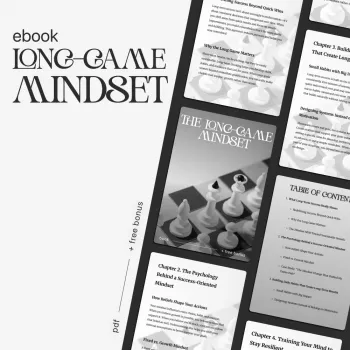
The Long-Game Mindset: Building Long-Term Success, Sustainable Growth, and Resilience
Quick wins can feel exciting, but they rarely create lasting progress. A long-game mindset focuses on steady improvement, durable habits, and the ability to stay grounded through setbacks. The goal is not perfection or constant motivation—it’s a practical way to keep moving when results are slow, challenges pile up, or plans need to change.
What a long-game mindset actually is
A long-game mindset is a way of thinking that protects progress over time. Instead of chasing short-term spikes, it prioritizes consistent inputs—habits, practice, and learning—because inputs compound even when outcomes are delayed.
- Inputs over outcomes: focus on what can be repeated daily or weekly, not what can be forced instantly.
- Identity-based habits: actions align with the kind of person being developed (a writer writes, a healthy person moves, a reliable leader follows through).
- Time as an ally: skills, relationships, and health improve through compounding, not intensity alone.
- Trend-based progress: measure progress in seasons and patterns, not day-to-day fluctuations.
- Adaptability: tactics can change without abandoning the mission.
This mindset is less about “trying harder” and more about building a structure that can survive real life.
Why sustainable growth beats hustle cycles
Hustle cycles often run on adrenaline: a big push, late nights, and constant urgency. The trouble is that adrenaline isn’t a reliable fuel source. It raises burnout risk, leads to inconsistency, and can make progress feel fragile—like it only counts when it’s extreme.
Sustainable growth protects the engine: sleep, nutrition, mental bandwidth, and time boundaries. It favors smaller commitments that can be kept during busy or stressful periods, because long-term success becomes more likely when effort is repeatable, not heroic. A realistic pace also makes it easier to recover from setbacks without quitting.
Sustainable growth vs. short-term surge
| Approach | Typical pattern | Common result | Long-game alternative |
|---|---|---|---|
| All-or-nothing sprints | Big push, then crash | Inconsistency and guilt | Minimum viable habit that never stops |
| Outcome obsession | Constant checking and comparison | Anxiety and reactive decisions | Input tracking and weekly review |
| Overcommitment | Too many goals at once | Drop-offs and decision fatigue | One priority plus a small maintenance plan |
| Avoiding discomfort | Quit when it gets hard | Plateau | Practice tolerance for boredom and slow gains |
Core skills: patience, consistency, and emotional regulation
The long game isn’t vague optimism. It’s a set of trainable skills that stabilize effort.
- Patience: trained by choosing actions that pay off later—reading, deliberate practice, savings, and fitness fundamentals. Patience improves when attention moves from “How fast?” to “How reliably?”
- Consistency: mostly a design problem. Reduce friction, pre-decide, and simplify steps. If the habit requires negotiations every day, it won’t last.
- Emotional regulation: keeps goals stable when feelings fluctuate. Moods are treated as weather, not commands. You can have a bad day and still keep a small promise.
- Self-trust: grows when small commitments are kept. Confidence follows evidence.
- Resilience: strengthens when setbacks are reframed as feedback rather than personal failure. The American Psychological Association’s overview of resilience is a helpful reference for what resilience is (and isn’t): The Road to Resilience.
Protecting sleep is also part of emotional regulation—fatigue makes everything feel harder and more urgent. For evidence-based context, see the NIH resource on sleep deprivation: Sleep Deprivation and Deficiency.
A simple long-game system: compass, cadence, and compounding
A mindset sticks faster when it has a system attached to it. One practical model uses three parts.
Constraints are an advantage here. Limiting goals reduces overwhelm and increases follow-through. Instead of endlessly optimizing, run short experiments (2–4 weeks) to test methods without turning every decision into a life-or-death verdict. The Stanford Behavior Design Lab emphasizes making behavior easier through design and environment, not willpower alone: Behavior Design.
How to respond to setbacks without losing momentum
Practical routines that make the mindset stick
A focused resource for building the long-game mindset
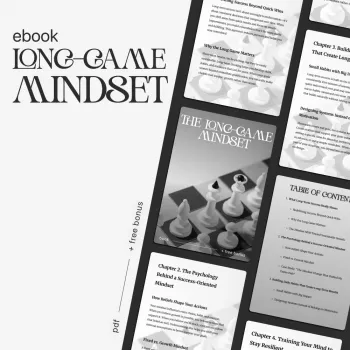
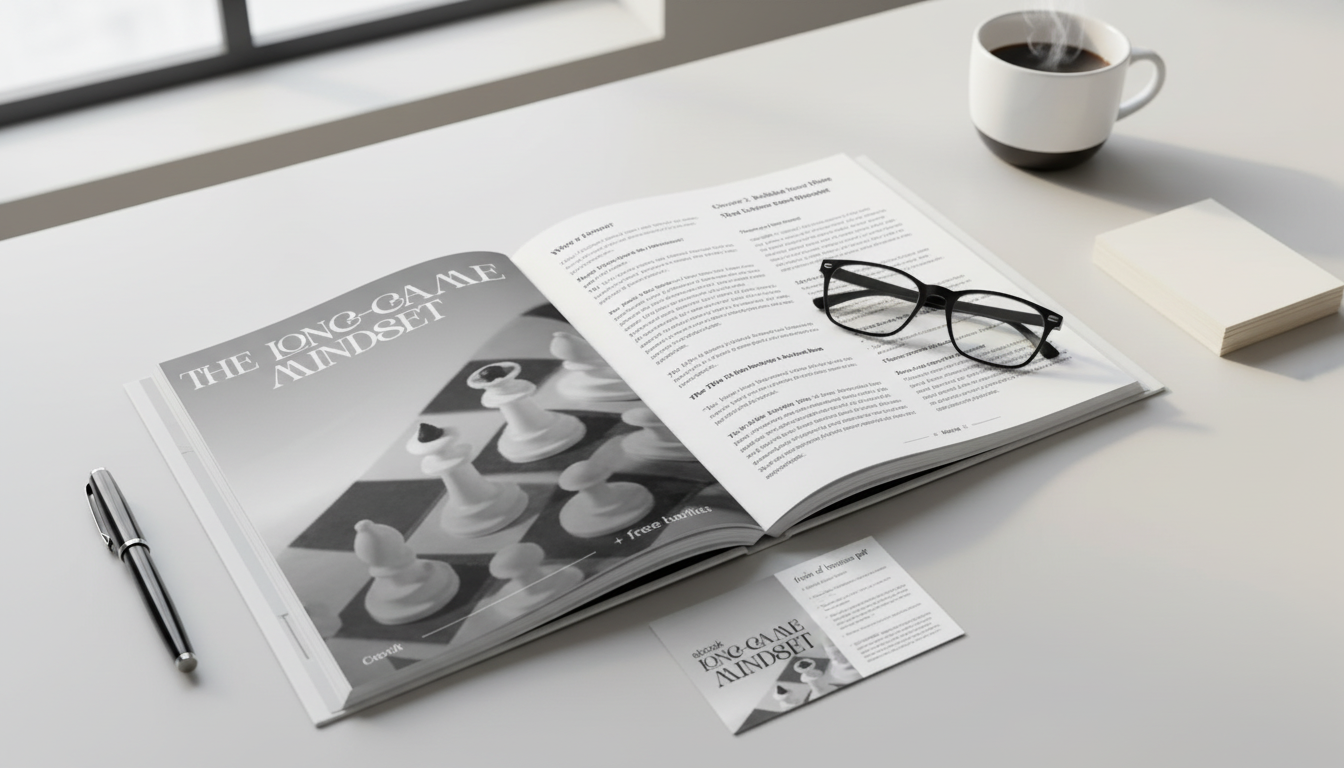
For a structured, step-by-step guide, The Long-Game Mindset | Ebook on How to Build a Mindset for Long-Term Success, Sustainable Growth & Resilience is designed for steady progress without relying on constant motivation. It’s a practical fit when progress feels slow, attention is scattered, or burnout has made “more effort” an unreliable strategy.
- Using the Clothes You Already Own with AI | Smart Wardrobe Guide for using chatgpt for outfit ideas based on your clothes | Digital Style System Download (helpful for reducing decision fatigue and making repeatable outfit systems).
- Checklist: How to Refresh & Declutter Your Amazon Lists Regularly | Digital Download eBook, Printable Guide, Step-by-Step Organization Checklist (useful for monthly reviews and keeping routines from drifting).
FAQ
How long does it take to build a long-game mindset?
Most people notice meaningful change in a few weeks, but it typically takes a few months to feel stable. The fastest path is building evidence through small repeated actions, using a weekly review, and expecting motivation to rise and fall.
What if motivation disappears halfway through a goal?
Design for low-motivation days with minimum viable habits, clear environment cues, and pre-scheduled sessions. When the focus stays on inputs (what gets done) rather than feelings (what you feel like doing), progress continues even when enthusiasm dips.
How do setbacks become part of progress instead of a reason to quit?
Use a simple protocol: pause and regulate (sleep, hydration, a short walk), review what’s controllable, adjust the plan, and restart with the next smallest step. The goal is to return to motion quickly, not to “make up for lost time.”










Leave a comment