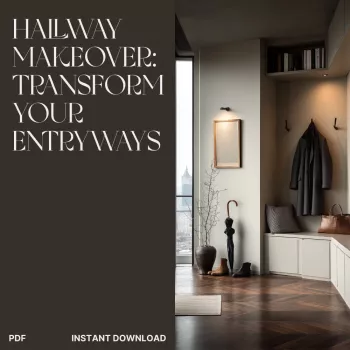
Hallway Makeover Ideas: Stylish, Efficient Entryways for Modern Small Spaces
A hallway is often the most used “room” in a home—and the easiest to neglect. With a few smart upgrades, it can become a calm, functional landing zone that still looks intentional. The best small-hallway updates are the ones that protect your walking path, add storage without visual noise, and improve lighting so the space feels open from day to night.
Start with a quick hallway audit
Before buying anything, take ten minutes to diagnose what’s actually making the space feel tight or messy.
- Measure the clear walking path; keep the center line open and avoid bulky furniture that narrows circulation.
- Identify pinch points: door swings, closet doors, vents, and radiator zones that limit placement.
- List daily drop-zone items (keys, bags, shoes, mail) and decide where each will live to prevent surface clutter.
- Note lighting gaps (dark corners, harsh overhead glare) and plan layered lighting before adding decor.
- Choose a simple style direction (warm modern, minimalist, Scandinavian, modern traditional) to keep finishes consistent into adjacent rooms.
If you want a practical, step-by-step plan with measurements, layout options, and styling checklists, Hallway Makeover: Stylish Ways to Transform Your Entryways (Digital eBook) is built specifically for modern small spaces.
Efficient layout rules for narrow entryways
In a narrow corridor, “less depth, more height” is the easiest way to reclaim breathing room.
- Prefer shallow pieces: slim console (about 10–14 inches deep), wall-mounted ledges, peg rails, and floating shelves.
- Use vertical space: hooks at varying heights, stacked wall storage, and tall mirrors to draw the eye upward.
- Keep the floor easy to clean: one runner or a durable mat system rather than multiple small rugs that shift.
- Create a landing strip: a single designated surface (or wall pocket) for keys/mail prevents scatter across the home.
- Balance function across both walls: storage on one side, visual calm (mirror/art) on the other to avoid a cramped feel.
Space-saving hallway swaps
| Common choice | Better swap for tight hallways | Why it works |
|---|---|---|
| Deep console table | Wall-mounted shelf + small tray | Keeps storage while protecting the walkway |
| Freestanding coat rack | Peg rail or hook strip | Uses wall height and reduces visual clutter |
| Multiple small rugs | One long runner with rug pad | Looks cleaner and reduces tripping/sliding |
| Large closed shoe cabinet | Slim shoe rack or lidded baskets under a bench | Stores footwear without dominating the space |
| Single harsh ceiling light | Flush mount + sconce/plug-in lamp | Layered lighting makes hallways feel wider and warmer |
Color, paint, and finishes that make hallways feel bigger
Hallways take a lot of wear, so the goal is a finish that’s forgiving and a palette that doesn’t “chop up” the sightline.
- Choose one primary wall color and repeat it nearby (living room/entry) to reduce visual stops in small homes.
- Use low-sheen finishes that hide scuffs; washable matte or eggshell is typically easier to maintain in high-traffic zones.
- Consider a slightly deeper tone on doors or trim for a modern, tailored look—especially in long corridors.
- Add a simple ceiling strategy: a lighter ceiling brightens; a subtle tint can make tall ceilings feel cozier without crowding.
- If doing wainscoting or paneling, keep proportions consistent and leave enough clear upper wall for art and lighting.
Lighting upgrades for an instant hallway makeover
Lighting is one of the fastest ways to make a narrow entry feel cleaner, safer, and more welcoming.
For energy-efficient upgrades and long-lasting bulbs, the U.S. Department of Energy’s overview of LED lighting is a helpful reference when comparing options and color temperatures.
Storage that stays stylish (and doesn’t spill into the walkway)
When planning circulation, it can help to sanity-check clearances against accessibility guidance like the U.S. Access Board’s ADA route and clearance standards (especially if you’re choosing between a slim console and wall-mounted storage).
Decor that works hard: mirrors, runners, and wall moments
Fast, budget-friendly refresh plan (60 minutes to a weekend)
If follow-through is the hard part (not the ideas), building small routines helps. The Long-Game Mindset (eBook) is a useful companion for setting simple daily reset habits that stick.
A guided plan for a cohesive hallway makeover
For an all-in-one blueprint you can follow room-by-room, Hallway Makeover: Stylish Ways to Transform Your Entryways (Digital eBook) focuses on modern layouts and space-savvy styling that keeps entryways functional.
If your hallway clutter starts with wardrobe overflow (too many “maybes” hanging by the door), Using the Clothes You Already Own with AI (Digital Style System Download) can help streamline outfits so coats, bags, and shoes don’t pile up as often.
FAQ
How can a small hallway look bigger without remodeling?
Keep the walkway clear, use one large mirror, and stick with a single runner instead of multiple rugs. Choose shallow furniture, brighten with warm layered lighting, and use cohesive paint to reduce visual breaks.
What’s the best lighting for a dark hallway?
Pair a low-profile ceiling fixture with a secondary light source like a sconce or picture light to eliminate shadows. Warm bulbs and reflective surfaces (mirrors, glass frames, light metals) help bounce light through the space.
How do you keep an entryway organized every day?
Set up zones for keys/mail, coats, and shoes, then limit shoes to a small daily rotation. Use hooks and a tray, and do a quick 2-minute reset each day to keep clutter from spreading.