Active Cat Indoor Enrichment Routine: Play, Hunt, Rest
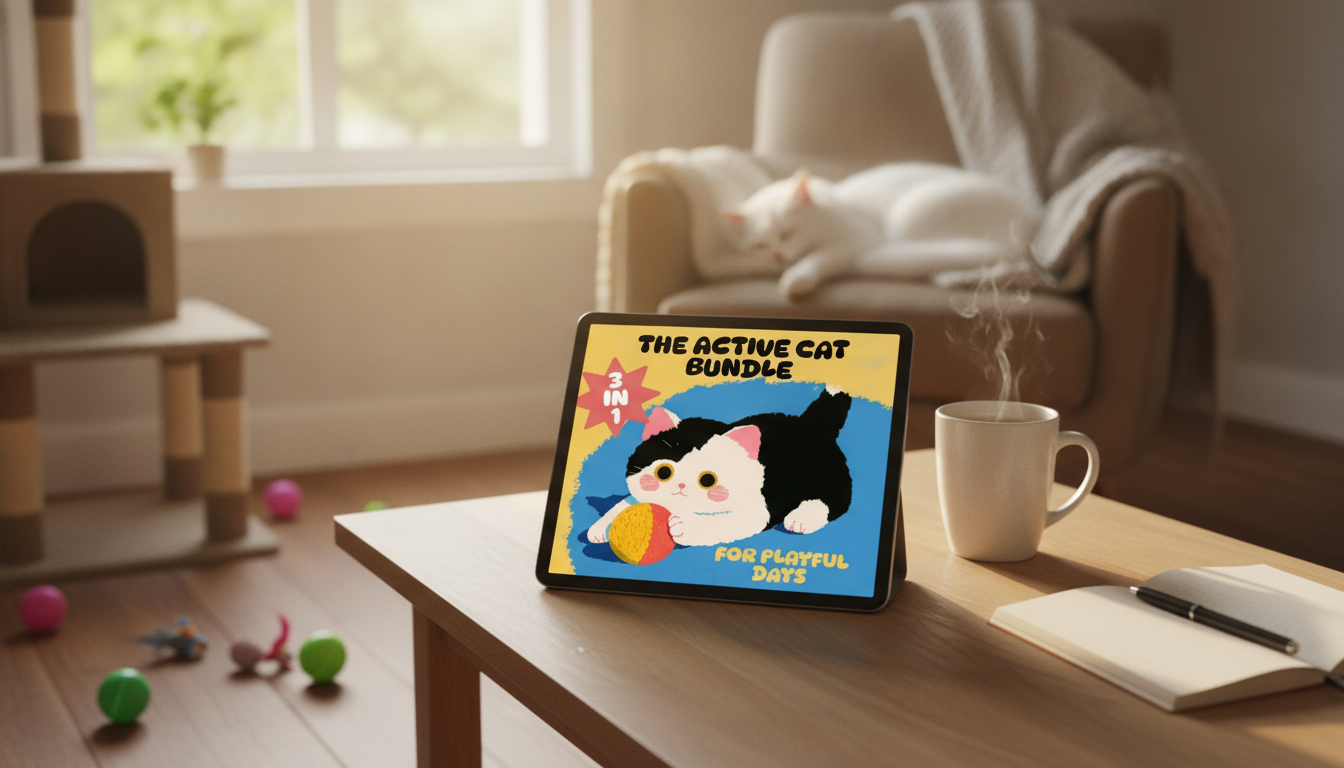
The Active Cat Bundle for Playful Days: Easy Indoor Enrichment for Happier, Busier Cats
Indoor cats thrive when their days include movement, hunting-style play, and problem-solving. This bundle is designed to turn ordinary at-home time into structured, repeatable enrichment—helping reduce boredom behaviors, support healthy activity, and make playtime more consistent and rewarding. For more guidance, see For Cat Owners | Indoor Pet Initiative – The Ohio State University.
Why indoor enrichment matters for active, curious cats
Even in safe, comfortable homes, many cats still carry a “workday” worth of instincts—hunt, explore, perch, and solve tiny problems. When those needs don’t get a healthy outlet, energy often leaks out in frustrating ways. For further reading, see Feline DIY Enrichment – ASPCA.
- Builds a predictable outlet for energy that might otherwise show up as nighttime zoomies, pestering, or destructive scratching
- Supports natural behaviors like stalking, chasing, pouncing, climbing, and foraging
- Helps many cats feel more confident by giving them control, choice, and safe challenges
- Pairs well with routine: short daily sessions often work better than occasional long play bursts
For general guidance on feline environmental needs, the American Association of Feline Practitioners (AAFP) guidelines are a helpful, science-informed reference point.
What’s inside The Active Cat Bundle for Playful Days
The goal isn’t to “buy more stuff.” It’s to make the toys and space you already have feel new again—through rotation, structure, and purposeful play. The bundle focuses on repeatable play patterns so you’re not reinventing the wheel every day.
- A guided approach to creating daily indoor play that feels “fresh” without constantly buying new toys
- Ideas for rotating activities so the same environment stays interesting across the week
- Enrichment prompts that can be adapted for kittens, adult cats, and seniors (with mobility-friendly alternatives)
- Practical ways to combine play, feeding, and rest so energy is spent in a natural cycle
A simple daily routine: play, hunt, eat, rest
If your schedule is busy, consistency matters more than perfection. A few minutes at the right times can make evenings calmer and help your cat feel “done” with the day.
- Morning mini-session (5–10 minutes): quick wand play or chase game to start the day with movement
- Midday enrichment (5 minutes): scatter feeding, puzzle-feeding, or a “find the treats” sniff-and-search
- Evening main session (10–15 minutes): higher-intensity play that ends with a food reward to encourage calm downtime
- Cooldown and reset: offer water, a quiet perch, or a cozy spot to help the transition from play to rest
This rhythm aligns with what many cat welfare organizations describe as healthy enrichment: opportunities to move, explore, and engage in species-typical behaviors. The ASPCA’s cat care resources and the AVMA’s pet owner cat resources are good places to learn more about broader care routines that support activity and wellbeing.
Indoor enrichment menu: rotate activities to prevent boredom
Enrichment works best when it’s “new enough” to spark curiosity, but familiar enough that your cat can succeed. Small changes—location, timing, difficulty—often matter more than brand-new toys.
- Use “rotation rules”: keep only a few toys available and swap them every 3–7 days
- Change the environment, not just the toy: move a tunnel, rearrange a box fort, shift a scratching post location
- Add challenge gradually: start easy, then increase complexity (smaller treat pieces, trickier puzzle, longer “hunt” path)
- Match the activity to the cat’s style: some prefer aerial wand play, others prefer ground skitters or hidden prey
Quick indoor enrichment ideas by goal
| Activity | Time needed | What it supports | Low-cost setup |
|---|---|---|---|
| Wand play with pauses and direction changes | 5–15 min | Chase/pounce sequence, cardio bursts | Wand toy; clear floor space |
| Puzzle-feeding or treat ball | 5–20 min | Foraging, problem-solving, slower eating | DIY: treats in a paper towel tube (supervised) |
| Box-and-paper “hunt trail” | 10–20 min | Exploration, confidence, scent work | Shipping boxes, crumpled paper, a few treats |
| Clicker-style tricks (sit, touch, target) | 3–8 min | Mental work, communication, cooperative behavior | Small treats; a target (spoon/stick) |
| Window perch + bird/squirrel viewing | Any | Visual stimulation, calm enrichment | Secure perch; optional bird feeder outside |
Common challenges and how to adjust the plan
Most play issues aren’t “bad behavior.” They’re feedback. A small tweak to timing, toy style, or intensity can make a big difference.
Safety notes for indoor play and DIY enrichment
When this bundle is a great fit
Recommended digital guides (in stock)
- The Active Cat Bundle for Playful Days: Cat Indoor Enrichment & Fun eBook Bundle
- Bright Side Up: A Simple Guide to Getting Positive Thoughts Every Day | How to Get Positive Thoughts Daily Mindset Guide
FAQ
How much play does an indoor cat need each day?
Many indoor cats do well with about 15–30 minutes total per day, split into 2–3 short sessions. Kittens often need more, while seniors may prefer shorter, gentler play based on comfort and health.
What are the best indoor enrichment activities if my cat gets bored easily?
Use toy rotation, change play locations, and mix hunting-style wand play with foraging or puzzle-feeding. Ending sessions with a small food reward can also make the routine more satisfying and repeatable.
Can enrichment help with nighttime zoomies?
Yes—an evening play session that follows a play-hunt-eat-rest pattern often helps cats settle. Consistent daytime enrichment also reduces “saved up” energy that tends to explode at night.











Leave a comment