Child-Safe Home Organization: A Guide That Grows
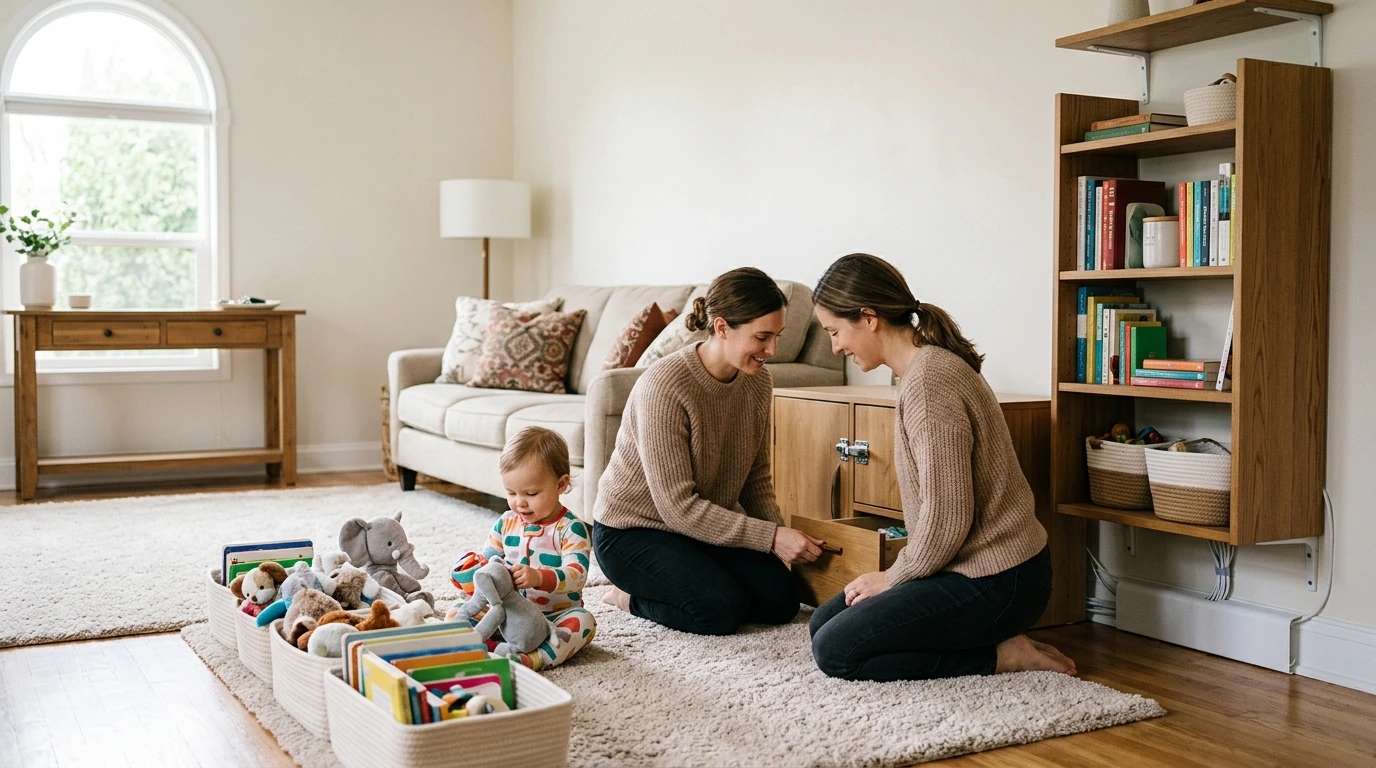
A Home That Grows Safely With Your Child
Child-safe organization works best when it keeps pace with development—because what’s harmless to a newborn can become a temptation to a crawler, a hazard to a climber, and a power tool for a confident preschooler. A safer home isn’t only about adding locks; it’s about designing storage that reduces daily risk, keeps essentials easy to reach, and builds routines your family can actually maintain.
If you want a step-by-step reference you can keep open during a weekend reset, consider A Home That Grows Safely With Your Child: Essential Guide to Child-Safe Home Organization.
Start with a growth-based safety map
Before buying a single bin or latch, do a quick “capability audit.” Get down to your child’s eye level and move room by room, noting what’s reachable now and what will become reachable soon.
- Look for cords, handles, dangling tablecloths, pet bowls, low drawers, and anything shiny and graspable.
- Sort risks into three tiers: immediate (choking, poisoning, falls), frequent (pinches, burns, tipping), and situational (guests, parties, renovations).
- Create “yes zones” (safe access) and “not yet zones” (restricted) so learning happens with less constant stopping.
- Reassess every 2–3 months or after milestones: crawling, cruising, climbing, opening doors, potty training, and starting school.
The core rule: store by danger level, not by convenience
Convenient storage often puts adult items within a child’s reach. Safety-first storage flips the logic: the most dangerous items must be the hardest to access.
- Keep hazards locked or latched above adult shoulder height: cleaners, medications, batteries, alcohol, vape supplies, sharp tools, matches, and small magnets.
- Use a “one-hand rule” for daily caregiving: diapers, wipes, ointment, and a change of clothes should be reachable while holding a child.
- Prefer closed storage for high-risk items and open bins for low-risk toys to reduce rummaging and accidental spills.
- Label bins with simple words and pictures for fast resets and to reinforce independent cleanup.
Anchor points that prevent the biggest accidents
Some of the most serious home injuries come from furniture tip-overs, access to button batteries, and cord-related hazards. A few organization choices can dramatically reduce exposure.
- Anchor dressers, bookshelves, and TVs to wall studs; avoid placing tempting items (remote controls, toys) on top of furniture. The U.S. Consumer Product Safety Commission’s Anchor It! guidance is a solid reference for tip-over prevention.
- Manage cords: shorten blinds cords, route device chargers behind furniture, and use cord covers where needed.
- Create a “landing zone” near the entryway for keys, coins, sunglasses, and other small objects that become choking hazards if dropped.
- Use a battery safety routine: secure battery compartments, store spares in a locked container, and dispose of used batteries immediately.
Room-by-room organization that reduces hazards
Kitchen
- Reserve one low cabinet for safe items (plastic bowls, child cups) and lock all others.
- Keep knives and hot tools in high, closed storage; turn pot handles inward while cooking.
- Keep the trash can latched or inside a cabinet to reduce access to sharp packaging and choking risks.
Bathroom
- Lock medications, cosmetics, razors, and cleaning supplies. For poisoning prevention tips and what to do if an exposure happens, see the National Capital Poison Center.
- Use a non-slip bath mat; store hair tools unplugged and out of reach.
- Consider a toilet latch if your child is persistent about water play.
Living room
- Minimize climbable “stairs” made of ottomans and side tables.
- Use corner guards where traffic is heavy; keep remotes and coin-sized items in a lidded container.
- Anchor any furniture a child can pull up on or climb.
Bedrooms
Laundry/utility
Garage/workshop
A safety-first storage plan by age and stage
Quick organization checklist by risk level
| Area | High-risk items to secure | Safer placement/system |
|---|---|---|
| Kitchen | Knives, cleaners, dishwasher pods, small magnets | Locked high cabinet; one low “yes” cabinet for child-safe items |
| Bathroom | Medications, razors, cosmetics, hair tools | Lockbox or latched cabinet; unplug and store hair tools high |
| Living room | Batteries, cords, tip-over furniture | Lidded catch-all; cord routing; anchor furniture |
| Entryway | Keys, coins, pet meds, small accessories | Wall-mounted shelf with tray; lidded bowl above reach |
| Laundry | Detergent, bleach, stain removers | Locked high cabinet; never store pods in open bins |
Toy and book organization that discourages dumping
Daily reset routines that keep safety systems working
For building consistent routines that stick (even during busy weeks), Long-Term Growth: Build Habits That Last can help structure daily and weekly check-ins.
Support independent skills without creating new hazards
A practical guide to setting up a child-safe home organization system
- Use A Home That Grows Safely With Your Child: Essential Guide to Child-Safe Home Organization as a step-by-step reference for room priorities, storage choices, and routines that adapt as children grow.
- Keep it accessible on a phone or tablet for quick checks during transitions like starting solids, the toddler climbing phase, or reorganizing play spaces.
- Pair it with a monthly walk-through checklist to maintain consistency across caregivers and rooms.
FAQ
What are the most common home organization hazards for toddlers?
The biggest ones are choking hazards from small items (coins, batteries, tiny toy parts), unsecured furniture tip-overs, accessible cleaning products and medications, dangling cords, and climbable “boost” setups created by movable furniture.
How often should a child-safe home setup be updated?
Review it every 2–3 months and after milestones like crawling, walking, climbing, or opening doors. It’s also smart to re-check after moves, new furniture, holidays, or bringing new household products into the home.
What’s the safest way to store cleaning products and laundry pods?
Store them locked, above reach, and in their original containers—never in open baskets or within easy access under the sink unless the cabinet is latched. Make “return immediately after use” a non-negotiable habit.












Leave a comment