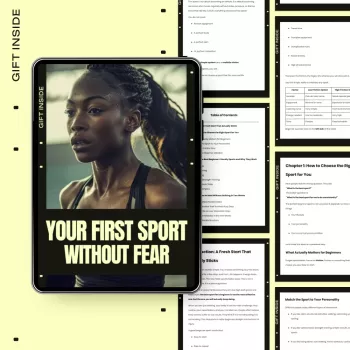
Starting a sport for the first time (or the first time in a long time) can feel like walking into a room where everyone already knows the rules. The fastest way to build confidence is to pick a sport that matches your body, schedule, and personality—and to start small enough that “showing up” counts as a win. Our team put together this clear, beginner-friendly path: how to choose your first sport without fear, what to prepare, and how to stay consistent long enough to feel real progress.
Beginner-friendly doesn’t mean “easy” or “no sweat.” It means the barrier to entry is low: minimal gear, simple rules, and built-in ways to scale intensity. The best first sport is the one that fits your current energy, joints, time, and budget—then grows with your skill over weeks, not days.
Feeling awkward at first is normal. Confidence comes from repetition, not from being naturally “good.” Look for sports where a 20–30 minute session still counts as meaningful training, so you can stack wins even on busy weeks. Most importantly, avoid “all-or-nothing” thinking: starting a sport is about building a routine, not proving toughness.
Pick one primary driver: stress relief, weight management, strength, social connection, skill-building, or outdoor time. When your sport matches your “why,” it’s easier to show up.
Decide what feels safest right now: solo (low social pressure), partner-based (guided practice), or group (built-in motivation). There’s no “best” choice—only what you’ll actually do this month.
If you have joint concerns, start low-impact (swimming, cycling, rowing, yoga). If you want variety and can tolerate more bounce, moderate-impact options like hiking or dance work well. Higher-impact sports (running, court sports) can be great—if you’re ready to build up gradually.
If time is tight, sports that allow short sessions (walking, cycling, bodyweight training) beat sports that require long blocks. Consistency beats the “perfect” workout.
Commit for four weeks, then reassess based on energy, enjoyment, and recovery. You’re not choosing your forever identity—you’re choosing your next step.
| If you want… | Try… | Why it works for beginners | Start with |
|---|---|---|---|
| Low stress + gentle movement | Walking, beginner yoga, easy cycling | Easy to scale; fast recovery | 20 min, 2–3x/week |
| Quick cardio gains | Brisk walking intervals, stationary bike, rowing machine | Intensity can be controlled precisely | 10–15 min intervals, 2x/week |
| Strength + confidence | Bodyweight training, resistance bands, beginner lifting | Clear progression; measurable wins | 2 full-body sessions/week |
| Social motivation | Beginner classes (dance, martial arts basics), recreational leagues | Structure + accountability | 1 class/week + 1 easy practice |
| Outdoor reset | Hiking, trail walking, casual kayaking | Mood boost; flexible pacing | 60 min weekend session |
Your first week is about lowering decision fatigue. Pick one location and one time window (example: Tuesday/Thursday after work). Prepare a “go bag” once: shoes/clothes, water, a small towel, and a note with your plan.
Start with a confidence pace. You should finish feeling like you could do more—not like you barely survived. Use a tiny goal: show up for 10 minutes. Finishing early is allowed; quitting the habit is not. If training around others feels intimidating, try off-peak hours or a beginner-only class session. Track only two things: sessions completed and how you felt afterward.
Week 1 — Learn the basics: Do 2 sessions at an easy pace and focus on form, rules, and comfort.
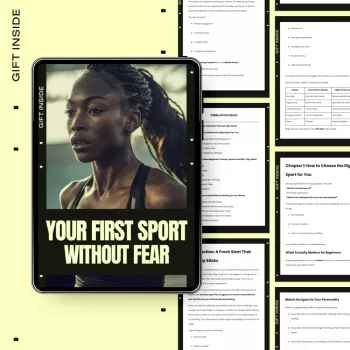
If you want a structured, beginner-friendly roadmap—from choosing a sport to building confidence session by session—our team recommends Your First Sport Without Fear – Beginner-Friendly Fitness eBook Guide | Find the best sport for beginners & Start Confidently. It’s a strong fit if you’re stuck in analysis paralysis, nervous about being judged, or unsure how to start without overdoing it.
If consistency is the hardest part, pair your sport plan with Long-Term Growth: Build Habits That Last | How to Focus on Long-Term Growth | Digital Productivity & Success Guide | Instant Download to keep your routines small, realistic, and repeatable after the first burst of motivation.
For general health targets, you can also review activity guidelines from the World Health Organization (WHO) and the CDC—then scale your start to match your current baseline.
Start with a low-barrier option like walking, easy cycling, swimming, or beginner strength training, and keep the first sessions intentionally easy. The best choice is the one that matches your joint comfort and schedule so you can repeat it consistently.
A simple start is 2–3 sessions per week, with at least one rest day between harder efforts. After about four weeks, add time gradually if your recovery feels good and you’re enjoying it.
Use off-peak times or beginner-only classes, and arrive with a written micro-plan so you’re not improvising in public. Keep goals tiny (even 10 minutes counts) and track private wins like improved breathing or smoother technique.




Leave a comment