New Kitten First Days: Calm Safe Room & 72-Hour Plan
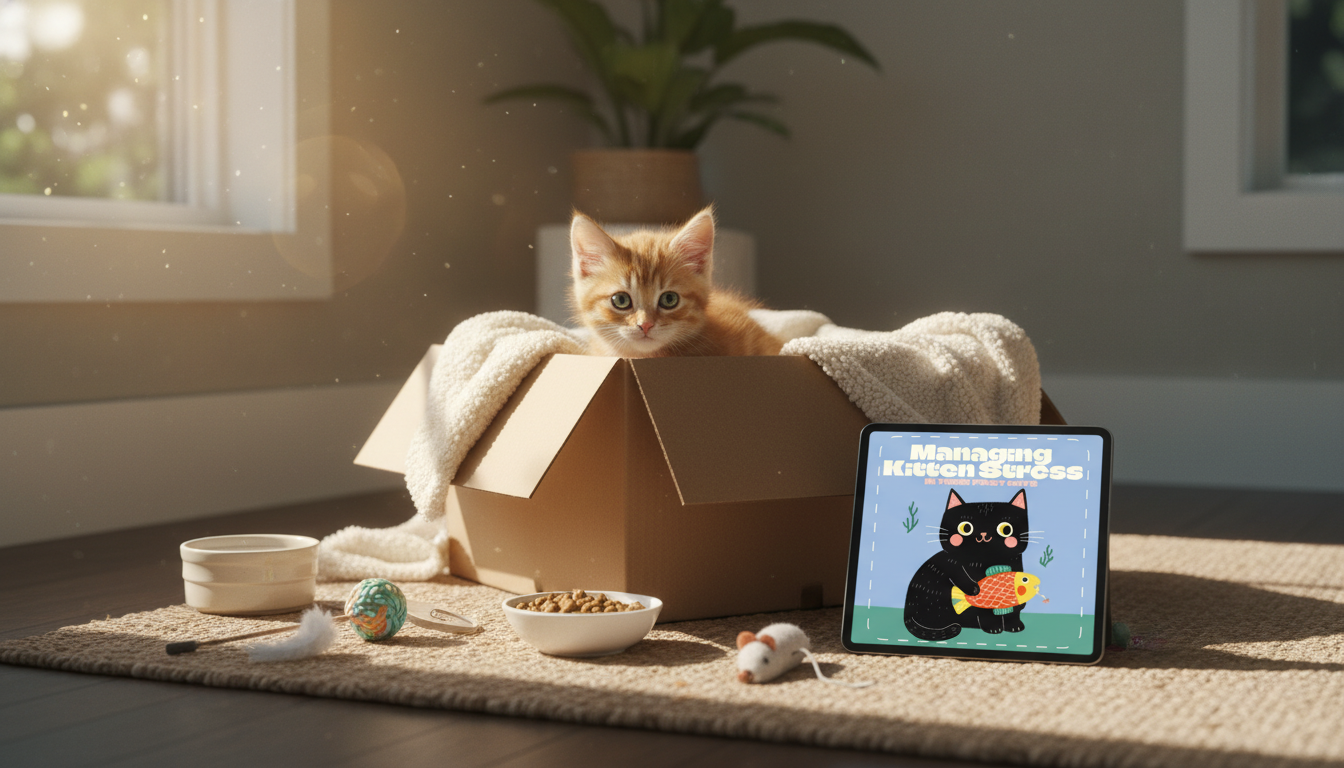
Calm & Curious: Helping a New Kitten Feel Safe in the First Days
The first few days in a new home can feel overwhelming for a kitten: new smells, new sounds, new people, and separation from familiar littermates. A calm setup and predictable routines reduce stress and make it easier for a kitten to eat, use the litter box, rest, and begin gentle socialization.
What stress can look like in a kitten
Some nerves are normal, especially in the first 24–72 hours. The goal is to notice patterns and respond with steady, low-pressure support.
- Hiding for long periods, freezing in place, or avoiding contact
- Reduced appetite, skipping water, or eating only when the room is quiet
- Vocalizing more than usual (crying at night), restlessness, pacing
- Litter box changes: not using it, frequent attempts, diarrhea from stress
- Body language clues: flattened ears, tucked tail, wide pupils, crouching posture
- When to treat it as urgent: repeated vomiting, severe lethargy, labored breathing, blood in stool, or not eating for 24 hours (especially very young kittens)
If you’re ever unsure, it’s reasonable to call a veterinarian sooner rather than later. Helpful general references include the American Veterinary Medical Association (AVMA) cat care resources and International Cat Care’s guidance on bringing a new cat home.
Set up a low-stress “safe room” before exploring the whole house
A safe room gives a kitten a predictable “home base” while they learn that your household is secure and consistent.
- Choose a quiet room with a door (bedroom, office) to limit overwhelming space at first
- Provide essentials in easy reach: litter box, food, water, bedding, and a hiding option
- Use a covered hide (carrier with blanket, cat cave, box on its side) so hiding is allowed but still accessible
- Place litter box away from food/water; keep pathways clear for confident movement
- Reduce stimuli: soft lighting, low TV volume, fewer visitors, and slow introductions
- Add comfort cues: familiar fabric, gentle white noise, and a consistent scent environment (avoid strong cleaners/perfumes)
Day-by-day routine for the first 72 hours
The first three days work best with small, repeatable steps. Think “steady and boring” rather than “big welcome tour.”
- Arrival (first hour): Bring kitten directly to the safe room; allow voluntary exit from the carrier; offer water and a small meal.
- First night: Keep the environment dark and calm; offer a warm sleeping spot; expect some calling—respond quietly without over-handling.
- Day 1: Short, predictable check-ins; sit on the floor and let the kitten approach; reward curiosity with a treat or gentle play.
- Day 2: Begin brief interactive play sessions (wand toy) to build confidence; introduce light handling only if relaxed.
- Day 3: Expand territory gradually (one additional room at a time) if litter box use and eating are consistent.
- Keep schedules consistent: feeding times, play, and rest cues at similar times each day.
First-days comfort checklist: what to do and what to avoid
| Situation | Do | Avoid |
|---|---|---|
| Kitten hides | Let hiding be safe; sit nearby and speak softly; offer treats at the edge of the hide | Dragging the kitten out or cornering it |
| Won’t eat right away | Offer the same food used previously if known; warm wet food slightly; keep bowls near but not inside the litter area | Constantly changing foods or hovering over the bowl |
| Night crying | Provide a warm bed; keep a soft routine; add a ticking clock/white noise if helpful | Punishment, loud shushing, or sudden lights |
| Startles easily | Move slowly; lower voices; create predictable cues before handling | Fast reaching hands, loud greetings, or surprise pick-ups |
| Litter box misses | Use an open, low-entry box; place kitten in box after meals/naps; clean accidents with enzymatic cleaner | Ammonia-based cleaners or scolding |
Gentle socialization without overwhelm
Socialization is less about “getting the kitten used to everything now” and more about building trust through many tiny wins.
- Follow the kitten’s pace: approach-and-retreat is normal; end interactions before the kitten becomes tense
- Pair new experiences with something positive: treats, play, or calm petting (if welcomed)
- Handle in tiny “micro-sessions”: touch shoulder, then pause; lift only when relaxed and supported
- Build confidence through play: 2–5 short sessions daily, then allow a cool-down and nap
- Introduce new household sounds at low volume (vacuum from another room, doorbell tone) and increase slowly over days
- Kids and guests: seated interactions, quiet voices, no chasing; use a rule that the kitten can always walk away
Comfort supports: warmth, scent, and soothing environments
Feeding, hydration, and litter box basics that prevent stress spirals
When to slow down—and when to contact a veterinarian
A printable plan for calmer first days
Helpful digital downloads
- Calm & Curious: Managing Kitten Stress in Their First Days (Printable Digital Guide)
- The Long-Game Mindset (Digital eBook)
FAQ
How long does it take a kitten to adjust to a new home?
Many kittens show small signs of comfort within a few days, but full confidence often builds over one to two weeks. Progress looks like consistent eating and drinking, regular litter box use, and gradually more exploring and play.
Should a new kitten sleep alone the first night?
It’s typically safest for a new kitten to sleep in a prepared safe room so they can’t get lost or into hazards. Offer warmth and a cozy hide, and if they cry, respond softly and calmly while letting the kitten choose how close they want to be.
What are the biggest mistakes that increase kitten stress?
Common stress triggers include forcing handling, giving too much space too soon, loud or crowded introductions, inconsistent feeding/play routines, and punishing accidents. Instead, keep a small territory at first, move slowly, reward bravery, and clean mishaps without scolding.












Leave a comment