Long-Term Growth on Normal Days: Habits, Focus, System

Long-Term Growth That Sticks Starts With What You Do on “Normal” Days
Long-term growth rarely comes from one huge burst of effort. It comes from repeatable habits, clear priorities, and a setup that keeps progress moving even when life gets noisy. The goal isn’t a perfect streak—it’s a system that makes “getting back to it” feel automatic.
What follows is a practical framework: pick a direction, build habits that survive real life, protect focus, and keep your digital tools simple enough to use consistently.
What “Long-Term Growth” Looks Like in Daily Life
- Progress measured in trends, not streaks: a missed day becomes a reset, not a collapse.
- Identity-driven habits: actions tied to the kind of person you’re becoming (reliable, healthy, skilled), not a temporary push.
- Small, frequent wins that compound: skills, health, finances, and relationships improve through routines you can repeat.
- A stable baseline with seasonal sprints: keep a simple “always” routine, then layer on short growth sprints when capacity allows.
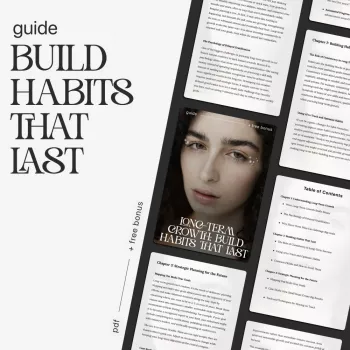
If you want a deeper dive with templates and step-by-step structure, Long-Term Growth: Build Habits That Last (digital guide) is built to help you set up the system quickly and keep it lightweight.
Start With Direction: Choose 1–3 Growth Pillars
Trying to improve everything at once usually turns into maintaining nothing. Pick 1–3 pillars (health, career skills, creativity, relationships, finances) and define what “success” looks like in one sentence per pillar.
- Write a one-sentence win: clear enough to guide weekly choices.
- Set a minimum standard (habit floor): the version you can do even during stressful weeks.
- Set an ideal standard (habit target): the version for normal weeks so you don’t under-reach.
Growth Pillars → Habits That Compound
| Pillar | Minimum standard (habit floor) | Ideal standard (habit target) | Simple proof of progress |
|---|---|---|---|
| Health | 10-minute walk | 3 workouts/week + 7k steps/day | Weekly step total or workouts logged |
| Career/Skills | 15 minutes practice | 3 focused sessions/week | Portfolio item or completed lesson |
| Finances | Track one expense/day | Weekly review + automated saving | Savings rate or net worth trend |
| Relationships | Send one check-in message | 1 quality block/week | Planned time or meaningful touchpoints |
Build Habits That Last: Design for Friction, Not Motivation
Motivation is helpful, but it’s not dependable. What’s dependable is reducing friction and making the habit easier to start than to avoid. If you’ve read about habit science from writers like James Clear, the theme is consistent: environment and repetition beat intensity.
- Make it obvious: tie the habit to a stable trigger (after coffee, after brushing teeth, after opening your laptop).
- Make it easy: reduce setup time to under two minutes (gear out, document open, shortcuts pinned).
- Make it satisfying: quick closure with a checkbox, a short note, or a tiny reflection—without demanding perfection.
- Use the “2-minute start”: begin in a tiny form that naturally continues (two minutes of stretching often becomes ten).
- Plan for failure: define a “when life happens” version so a rough day still counts.
Example: If your ideal is a 45-minute skill session, your floor might be opening the project file and doing five minutes. Floors keep identity intact; targets drive growth.
Focus on Long-Term Growth: Protect the Few Things That Matter
Focus isn’t just self-control—it’s structure. The American Psychological Association notes that self-control can be affected by stress and context, which is why strong systems rely less on willpower and more on planning and boundaries.
- Choose a weekly priority: one outcome that makes the week a win even if everything else is messy.
- Time-block your growth work: a recurring calendar appointment beats an open-ended to-do list.
- Batch communication: define 1–3 windows for email/text/social and keep deep work notification-free.
- Create “stop doing” rules: remove one low-value task or commitment each week to create capacity.
- Track leading + lagging indicators: outcomes (weight, revenue) plus behaviors (sessions, reps) to stay grounded.
A Digital Productivity System That Stays Simple
This is also where specialty checklists and guides can help you avoid reinventing structure. For example, if one of your pillars is a creative skill, Landscape Photography Basics for Beginners (digital download) can act like a ready-made practice path you can time-block. If a pillar is financial decision-making (like buying a reliable used vehicle), Car Truth Quest – Smart Used Car Buying Checklist (printable download) helps turn research into a repeatable process instead of a stressful scramble.
Consistency Without Burnout: Energy, Recovery, and Realistic Pace
If health is a pillar, even simple activity guidelines can help you set realistic floors; the NHS activity tips offer approachable ways to keep movement consistent.
A 14-Day Setup Plan for Momentum
Digital Guide for Building Habits and Long-Term Focus (Instant Download)
Get the Long-Term Growth digital guide here if you want a ready-to-use framework you can plug into your week in under an hour.
FAQ
How long does it take to build a habit that lasts?
There isn’t one universal timeline: habits can stabilize over weeks to months depending on complexity, environment, and consistency. Start with a small version tied to a reliable trigger, and judge progress by weekly adherence rather than daily perfection.
How can focus improve without relying on willpower?
Build focus into your environment: time-block one deep-work session, control notifications, and single-task during that block. Pre-commit by putting the session on your calendar and making starting friction low (open the file, set a timer, begin the first tiny step).
What’s the simplest way to track long-term growth?
Pick one leading indicator per pillar (minutes practiced, workouts completed, dollars saved) and jot it down once a week in a single note or spreadsheet. Look for trends over time, not daily fluctuations, and keep the dashboard simple enough that you’ll maintain it.








Leave a comment