One-Bag Travel Workflow: Pack Light With a Capsule Kit
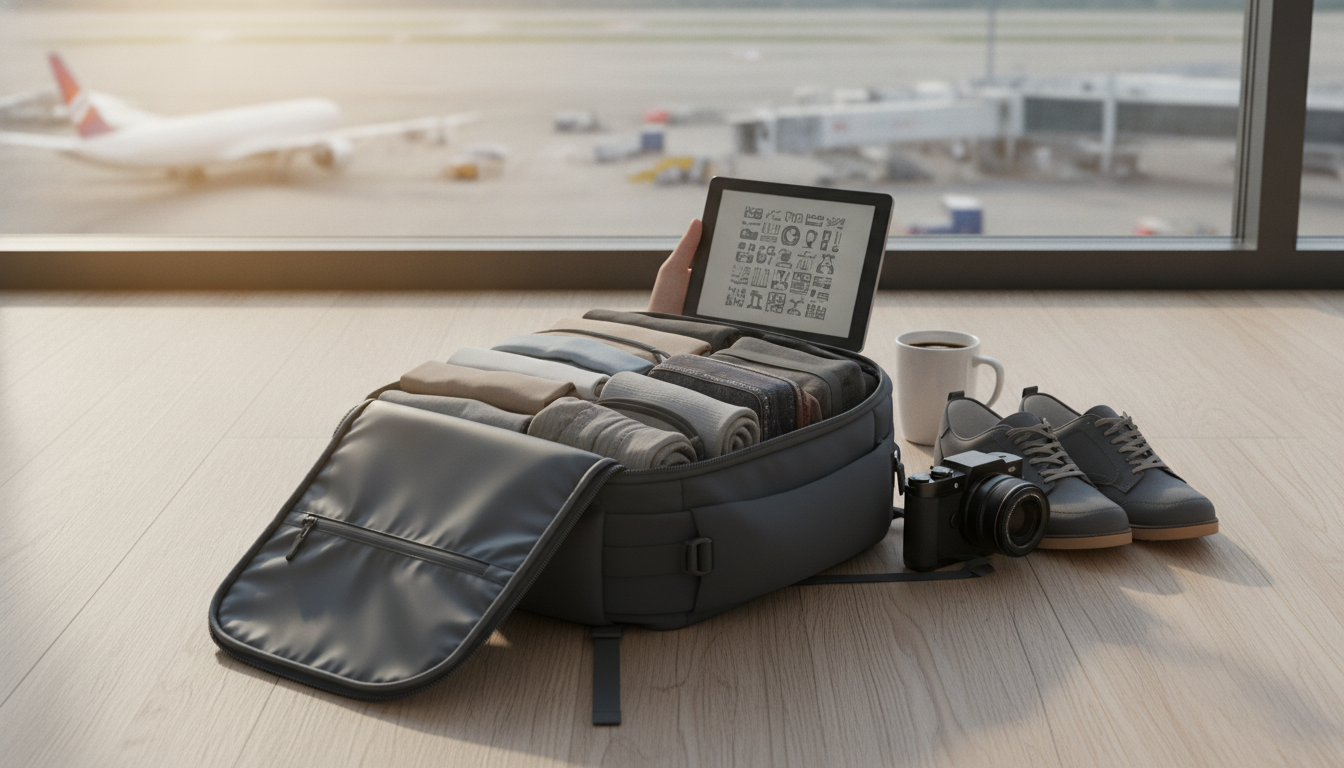
Travel Light, Live Free: A Minimalist System for One-Bag Trips
One-bag travel is less about owning the “perfect” backpack and more about running a repeatable packing system: choose versatile clothing, limit duplicates, plan for laundry, and keep essentials easy to grab. The payoff is real—faster airport transitions, easier movement on trains and sidewalks, and fewer on-the-road decisions—without feeling caught off guard when plans change.
What “one bag” really means (and what it doesn’t)
At its simplest, “one bag” means everything you need fits in a carry-on backpack you can comfortably wear while walking—often paired with a small personal-item pouch if your airline allows it. The goal is to stay within common cabin size limits and keep your hands free for tickets, coffee, or a railing on staircases.
One-bag travel isn’t deprivation. It’s selection: a set of items that work together across several days and a variety of situations. Done well, it feels like having fewer things, but better options.
Practical success criteria:
- Hands-free transit (no juggling rolling luggage and stairs).
- No checked-bag waits (and fewer lost-baggage worries).
- A kit that handles weather shifts and basic contingencies without overpacking.
The minimalist packing system: the 5-step workflow
Step 1 — Define the trip pattern
Before you touch your closet, define four variables: trip length, climate range, how “nice” you need to dress, and laundry access (sink washing, laundromat, hotel service). This keeps you from packing for imaginary scenarios.
Step 2 — Build a capsule wardrobe
Pick a tight color palette so everything mixes easily. Favor fabrics that re-wear well: merino blends, quick-dry synthetics, and wrinkle-resistant weaves. When your tops and bottoms all match, you can pack fewer pieces without repeating the same look.
Step 3 — Pack by function, not by outfit
Instead of building complete outfits, pack categories: base layers, tops, bottoms, insulation, rain, sleep/underwear, and footwear. This approach handles unexpected temperature swings and schedule changes better than outfit-by-outfit packing.
Step 4 — Minimize toiletry volume
Decant liquids into small travel containers, use solids when possible (like a shampoo bar), and keep everything compliant with carry-on liquid rules. For U.S. airport screening, reference the TSA 3-1-1 liquids rule so your kit doesn’t slow you down at security.
Step 5 — Stage and test-pack
Wear your bulkiest items (usually shoes and your warmest layer), load the bag, and do a 10-minute walk test. Then remove 10–20% of what you packed. That last reduction is often the difference between “manageable” and “effortless.”
A practical one-bag packing list for most trips
For many travelers, a reliable baseline looks like this: 3–4 tops, 1–2 bottoms, 1 mid-layer, 1 rain shell, plus 4–6 underwear and 4–6 socks. Adjust counts based on how often you’ll do laundry (every 3–5 days is a comfortable rhythm for most).
For footwear, one primary walking shoe is usually enough. Add an ultra-packable second pair only when your climate and activities justify it (hostels/showers, beach days, or dinners where you want something cleaner than your walking shoes).
Toiletries stay simple: toothbrush/paste, deodorant, a small set of skincare essentials, and a razor if needed. Keep liquids in one clear bag for quick removal at checkpoints.
Tech should be minimal: phone, charging cable, compact wall charger, optional power bank. Duplicate devices are weight multipliers—bring them only if work requires it.
One-bag checklist by category
| Category | Keep it to | Examples | Notes |
|---|---|---|---|
| Tops | 3–4 | 2 tees + 1 long-sleeve + 1 nicer top | Favor neutrals and easy layering |
| Bottoms | 1–2 | One pants + optional shorts/skirt | Choose one that works casual-to-smart |
| Outer layers | 2 | Mid-layer + rain shell | Add insulation only if climate demands it |
| Underwear & socks | 4–6 each | Quick-dry preferred | Plan laundry every 3–5 days |
| Shoes | 1–2 pairs | Walking shoes + packable option | Wear the bulkiest pair in transit |
| Toiletries | One small kit | Decanted liquids + solids | Stay within carry-on liquid rules |
| Tech | Minimal | Phone + charger + optional power bank | Skip duplicates unless necessary |
| Documents | One pouch | Passport/ID + cards + copies | Keep accessible and secure |
Space-saving techniques that actually help
Start with a simple structure: packing cubes or “zones.” Put clothes in one block, toiletries in another, tech in another, and reserve an in-transit pocket for items you’ll need while moving (lip balm, headphones, passport pouch, snack).
Staying comfortable: laundry, re-wearing, and outfit rotation
Choosing the right carry-on backpack (without overthinking it)
For general cabin baggage expectations across airlines, review the IATA cabin baggage guidance, then confirm the exact dimensions and weight limits for your carrier.
A guided approach for building a repeatable system
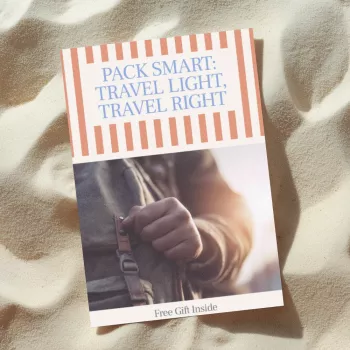
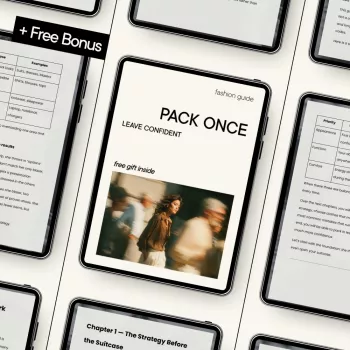
- Travel Light Live Free — Minimalist Travel Ebook Guide | How to Travel With Just a Carry On Backpack | Smart Packing System for One-Bag Travel
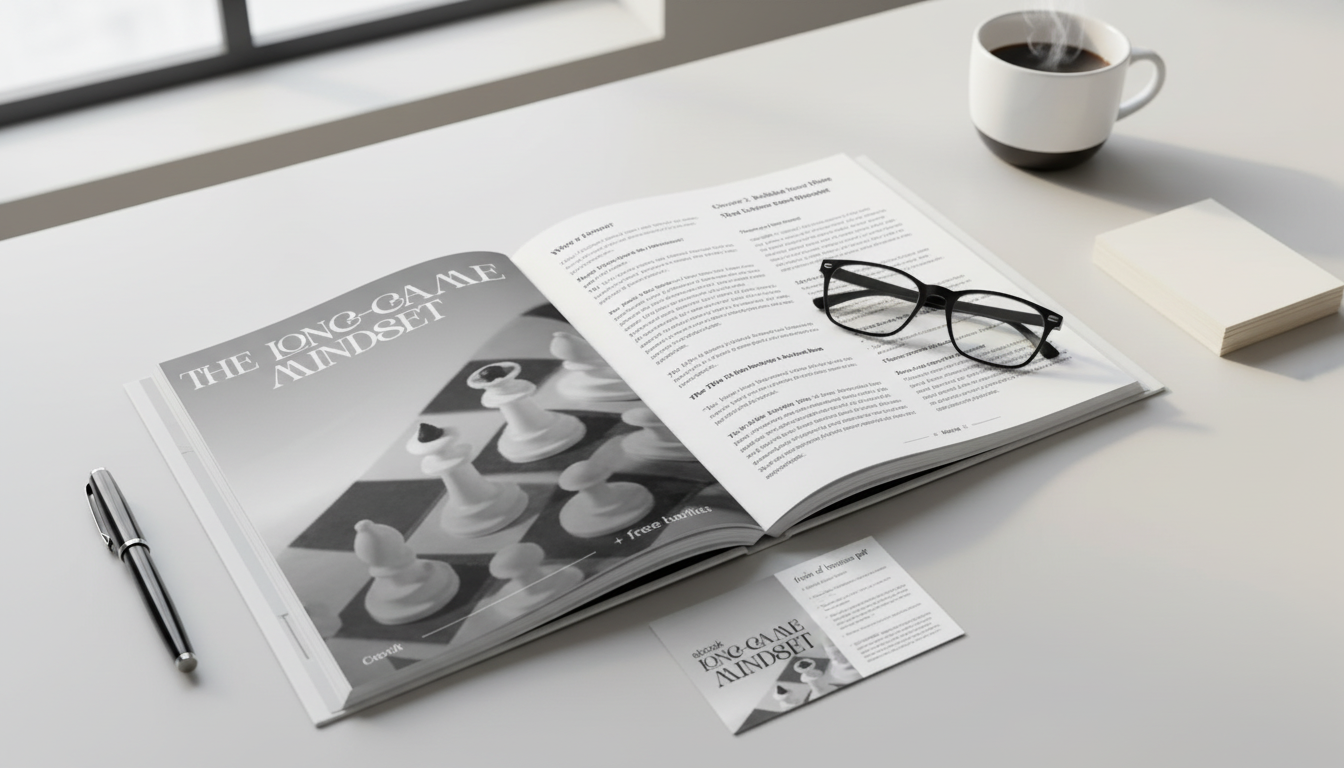
- Long-Term Growth: Build Habits That Last | How to Focus on Long-Term Growth | Digital Productivity & Success Guide | Instant Download
FAQ
How many outfits are enough for a one-bag trip?
Pack by category and plan around laundry cadence: for most trips, 3–4 tops, 1–2 bottoms, a mid-layer, a rain shell, and 4–6 underwear/socks is plenty when washing every 3–5 days.
What should always go in a carry-on for minimalist travel?
Carry non-negotiables: documents, prescriptions/meds, valuables, chargers, and basic hygiene items—plus one change of essentials. Keep them in an easy-access pouch so you can move through transit without unpacking your whole bag.
Do packing cubes actually save space?
They mostly improve organization and can add mild compression for soft clothing. The biggest space savings still come from packing fewer items and choosing lighter, more compressible fabrics.








Leave a comment