A balcony can become a calm, green corner without a backyard—or a big learning curve. Our team sees the same pattern over and over: beginners don’t fail at “gardening,” they simply start with plants that don’t match their balcony’s real conditions. The good news is that a simple setup and a small, repeatable routine can keep containers thriving.
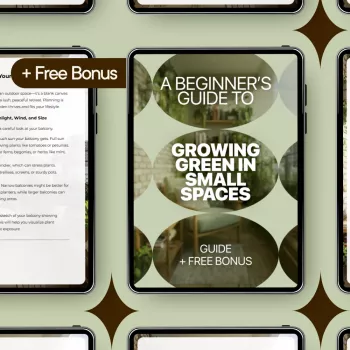
Below is a beginner-friendly plan that covers the practical balcony basics, plus the step-by-step support inside A Beginner’s Guide to Growing Green in Small Spaces – Digital Ebook, designed to help you choose the right plants, avoid common mistakes, and build habits that stick.
Take 2–3 days to note how many hours of direct sun your balcony actually gets. Morning and afternoon exposure can be very different, and even one building over can turn “sunny” into bright shade. This quick check prevents you from buying plants that never had a chance.
High balconies and open corners can dry potting mix fast and snap tender stems. If your balcony gets gusty, plan on heavier pots, a simple windbreak, and sturdier plant choices rather than tall, top-heavy starts right at the railing.
If you’re near a sink or hose, watering can be easy. If not, set yourself up with a comfortable watering can, saucers to protect surfaces, and plants that won’t punish you for missing a day.
| Balcony light | What it feels like | Beginner-friendly plant types |
|---|---|---|
| Full sun (6+ hours) | Strong direct sun most of the day | Herbs (basil, thyme), compact tomatoes/peppers, sun-loving flowers |
| Part sun (3–6 hours) | Bright with a few hours of direct sun | Leafy greens, many herbs, strawberries, mixed containers |
| Bright shade (0–3 hours direct) | Bright but mostly indirect light | Shade-tolerant greens, some herbs (mint), foliage plants |
Containers are your balcony garden’s “foundation,” and small container mistakes create big plant problems.
If you do only one thing “by the book,” make it this: use a quality potting mix intended for containers. Garden soil compacts in pots, holds water unevenly, and can suffocate roots. Container mix stays lighter and drains better—exactly what balcony plants need.
If you want deeper container-gardening fundamentals from a university source, the University of Minnesota Extension container gardening basics is a strong reference.
For broader home-gardening resources, the USDA Gardening and Landscaping hub is a helpful place to explore.
If you want a clear path (instead of scattered tips), we built A Beginner’s Guide to Growing Green in Small Spaces – Digital Ebook for true beginners. You can use it as a setup checklist, a planting companion while you pot things up, and a quick troubleshooting reference when a plant starts looking “off.”
And if your biggest struggle is consistency—remembering to water, checking plants before problems spread, or sticking with a simple routine—our team also recommends Long-Term Growth: Build Habits That Last (Digital Guide) as a practical companion for building routines that actually last.
Start by matching plants to your balcony light (full sun, part sun, or bright shade), then choose easy categories like herbs and leafy greens. Begin with just 2–3 plants so you can learn your balcony’s watering speed and wind exposure without getting overwhelmed.
It depends on pot size, sun, wind, and the plant, so the most reliable method is to check the top inch of potting mix and water deeply when it begins to dry. Hot or windy balconies usually dry out faster, especially in smaller containers.
Yes—drainage holes protect roots from staying waterlogged and help prevent rot. Use saucers to protect your balcony surface, and empty standing water when needed for plants that dislike wet feet.




Leave a comment