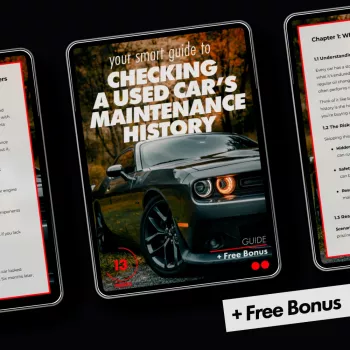
A used car may look great on a test drive, but its maintenance history can tell you more about how it has been cared for. Before you make an offer, take time to review the available paperwork, ask about gaps, and plan for an independent inspection.
Our digital guide offers a practical starting point for that review. You don’t need to be a mechanic to begin: a few careful comparisons can help you have a more useful conversation with the seller.
Service records can show whether routine work was performed, when major repairs took place, and how the car’s mileage changed over time. They can also reveal questions worth asking, such as whether a recommended service was completed or why an interval between visits was unusually long.
A well-documented history is helpful, but it is not a guarantee that a car is mechanically sound. Records describe work that was reported or documented in the past; they cannot fully establish the car’s condition today. That’s why we recommend combining a paperwork review with an independent pre-purchase inspection.
Ask the seller for dated invoices, a maintenance log, and any available inspection records. Invoices can be especially useful because they may list the work performed, the mileage at the visit, and the shop that completed it. An inspection report may identify concerns that were noted at a particular point in time, though you should ask whether any listed repairs were completed afterward.
Compare dates and mileage across the documents. Mileage should generally increase as the dates get later; an entry that doesn’t fit deserves a closer look. Check the vehicle identification number, or VIN, wherever it appears to make sure the paperwork matches the car. A missing VIN on an individual receipt does not necessarily invalidate it, but it gives you another reason to ask for clarification.
A vehicle history report can supplement these records with reported events and mileage entries. It may not include every service, however, because its contents depend on information submitted by participating sources.
| Record | What to check | Question to ask |
|---|---|---|
| Service invoices | Dates, mileage, and work performed | Are there receipts for major repairs? |
| Maintenance log | Service intervals and mileage | Were services completed on schedule? |
| Vehicle history report | Reported events and mileage entries | Can any gaps or inconsistencies be explained? |
Having many receipts is useful only if you understand what they show. Compare the recorded work with the manufacturer’s recommended maintenance schedule for the specific model, year, and mileage. The owner’s manual or manufacturer’s service information can help you identify services due by time as well as distance.
Pay particular attention to major scheduled work that could affect your near-term budget. If a service appears overdue, ask whether it was completed elsewhere and whether a receipt is available. You can also ask the inspecting mechanic what the service may cost and whether there are signs of related problems.
Gaps in documentation, inconsistent mileage, or overdue services are prompts for further questions, not automatic deal-breakers. A seller may have lost a receipt or used a shop that did not report its work. Still, an explanation should make sense alongside the rest of the information you have, and unresolved discrepancies may affect how comfortable you are making an offer.
Check for open safety recalls as well. Enter the car’s VIN on the NHTSA recalls page and ask the seller about any open items. A recall search complements your maintenance review; it does not replace an inspection.
Our Your Smart Guide to Checking a Used Car’s Maintenance History is a digital resource for savvy car buyers, available for $12.99. Use it as a starting point for organizing what you find and deciding what you still need to ask.
Before discussing price, make a short list of missing records, services that may be due, and repairs you want a mechanic to evaluate. Consider the potential future costs alongside the asking price rather than treating the purchase price as your only expense. You can use those findings to inform your negotiations or decide to continue your search.
Arrange an independent pre-purchase inspection even when the paperwork looks complete. The Federal Trade Commission’s used-car guidance also recommends an independent inspection before buying. Ask for a written report and an estimate for any recommended repairs so you can weigh them against your budget.
Maintenance records tell you about one car’s documented past; researching the model can help you understand broader reliability questions. Our Car Truth Quest used car buying checklist is a printable digital resource for that research.
When you’re ready to discuss the final price, our How to Dodge Dealer Add-Ons and Markup guide can help you prepare for that conversation. Our team recommends reviewing the full proposed price and asking about charges you don’t understand before you agree to a purchase.
Ask the seller about previous service providers and available receipts, consider a vehicle history report, and arrange an independent inspection. Missing records do not automatically mean the car was poorly maintained.
No. Reports depend on information submitted by participating sources, so compare them with receipts and other available records.
Yes. Records describe documented past work, while an independent inspection can help assess the car’s current condition.






Leave a comment