Clear Mind Yoga PDF: 10–20 Minute Brain Fog Reset
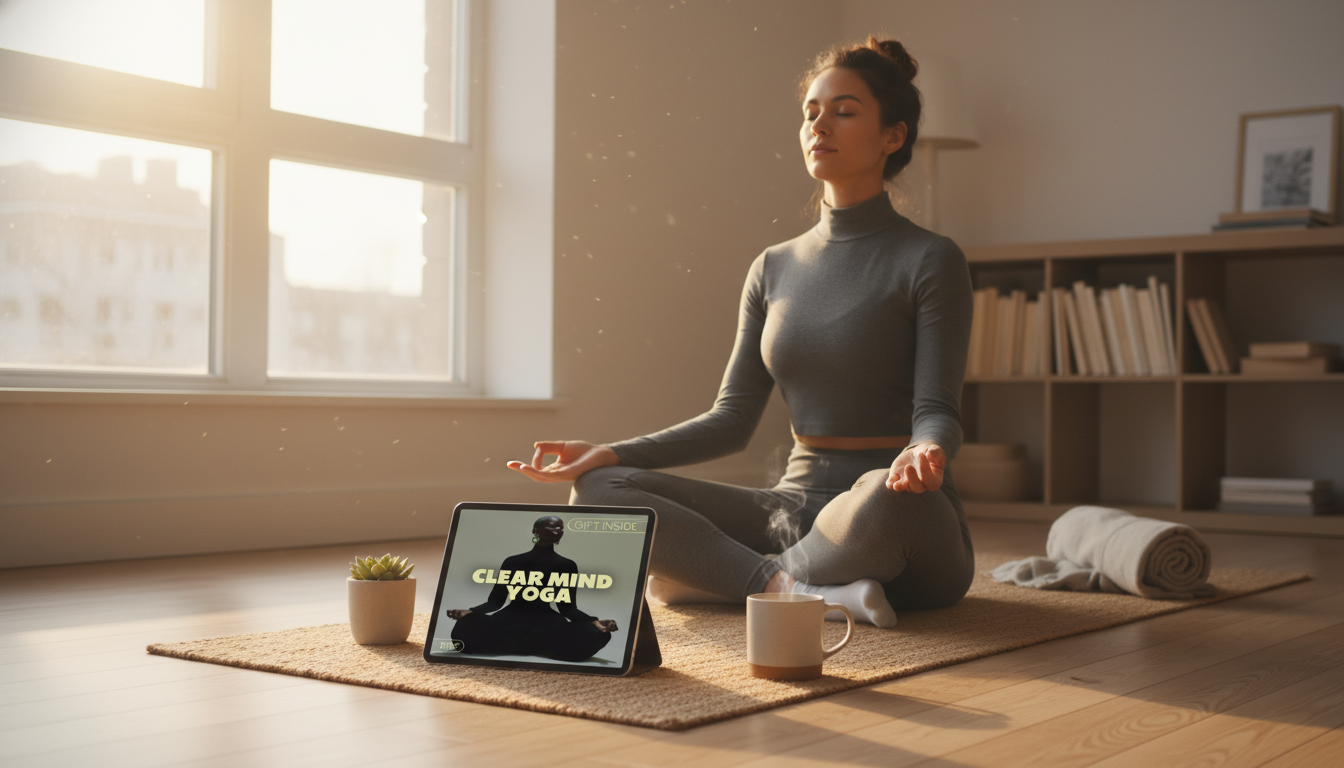
Clear Mind Yoga: A Simple Digital Routine for Mental Clarity and Less Brain Fog
Mental fatigue can show up as foggy thinking, slow focus, and an overworked nervous system—especially after long screen time or stressful weeks. Clear Mind Yoga is a downloadable PDF guide built around calming, focus-friendly yoga and breathwork to help reset attention, reduce mental overload, and support a clearer head with a repeatable routine. The goal isn’t to “push harder,” but to create a reliable downshift that makes it easier to think, prioritize, and move through the day with less mental friction.
When the mind feels “full”: common signs of brain fog and mental fatigue
Brain fog can feel vague, but it often has recognizable patterns—especially when stress, poor sleep, and long hours sitting are involved.
- Difficulty concentrating, scattered thoughts, and reduced working memory during everyday tasks
- Mental tiredness that doesn’t match physical activity levels, often paired with irritability or low motivation
- Tension patterns that feed cognitive fatigue (tight jaw/neck/shoulders, shallow breathing, clenched abdomen)
- A stress-response loop: poor sleep → low energy → more caffeine/screen time → more restlessness
- A gentle yoga + breath approach can support relaxation, steadier breathing, and improved self-regulation
Yoga and breathwork are widely used for stress management and sleep support, both of which influence attention and mental clarity. For background reading from authoritative sources, see NCCIH’s overview of yoga and Harvard Health on yoga, stress, and sleep.
What “Clear Mind Yoga” is designed to help with
Clarity rarely comes from one perfect session—it comes from a practice that’s easy enough to repeat. The Clear Mind Yoga PDF is built to remove common barriers (decision fatigue, complicated sequences, and too much screen time).
- Creating a repeatable, low-friction yoga routine that fits short breaks or end-of-day decompression
- Shifting from “wired and tired” to calm alertness using movement plus slower breathing
- Reducing neck/upper-back stiffness that often accompanies long periods of sitting
- Building a small, consistent practice that can be used during afternoon slumps, post-work transitions, or pre-sleep wind-down
- Offering a screen-light option: a PDF format that can be printed or used offline
If you want a simple starting point, the Clear Mind Yoga digital PDF guide is designed to keep the routine steady until it becomes automatic—so you spend less time planning and more time decompressing.
Quick start: a clarity-focused routine (10–20 minutes)
The most effective routine is the one that feels doable on a “low battery” day. Keep your setup quiet, your movements unhurried, and your breathing steady.
- Start with a quiet setup: water nearby, comfortable clothing, and a clear floor space
- Move slowly and prioritize steady breathing over depth of stretch
- Aim for a smooth transition between poses to reduce mental “noise”
- Finish with stillness (even 60–120 seconds) to let the nervous system settle
- Use the guide to keep the sequence consistent until it feels automatic
Sample Clear-Mind Flow (adjust as needed)
| Step | Practice | Time | Why it helps |
|---|---|---|---|
| 1 | Seated or lying breathing (slow inhale/exhale) | 2–3 min | Signals the body to downshift and reduces stress reactivity |
| 2 | Neck/shoulder mobility + gentle side bends | 2–3 min | Releases tension patterns linked to screen posture |
| 3 | Cat–Cow or simple spinal waves | 1–2 min | Encourages fuller breathing and eases back stiffness |
| 4 | Standing forward fold or half lift (soft knees) | 1–2 min | Calms and lengthens posterior chain without intensity |
| 5 | Low lunge or hip opener (both sides) | 3–5 min | Reduces hip tightness from sitting; supports smoother movement |
| 6 | Supine twist (both sides) | 2–3 min | Settles the body and can feel mentally “clearing” |
| 7 | Legs up the wall / supported rest | 2–5 min | Promotes relaxation and end-of-practice integration |
Using the PDF guide for consistency (without overthinking it)
Consistency improves results, but only if the routine stays simple. Use the PDF like a “default setting” for your nervous system—something you can return to without negotiating with yourself.
- Choose one default time: midday reset, post-work transition, or pre-bed wind-down
- Set a minimum: 8–10 minutes counts; consistency beats long sessions
- Print the routine page or save it for offline use to reduce extra screen time
- Track the simplest signal: “mind feels clearer / same / heavier” after practice for one week
- If energy is low, shorten holds; if the mind is restless, extend breathwork and the final rest
For many people, sleep consistency is a major lever for clearer thinking. If fatigue and fog are frequent, it can help to review basic sleep guidance from the CDC’s sleep resources alongside your movement routine.
Comfort-first modifications and safety notes
Simple add-ons that amplify mental clarity
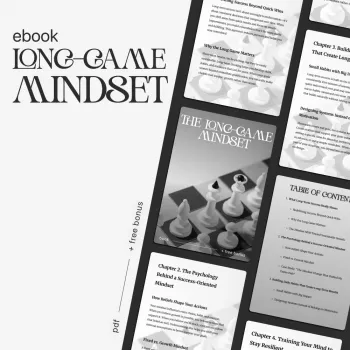
If you want a complementary resource for staying consistent (especially when motivation dips), The Long-Game Mindset ebook pairs well with a short daily or near-daily routine.
Product details at a glance
| Item | Details |
|---|---|
| Product | Clear Mind Yoga | Digital Guide for Mental Clarity |
| Delivery | PDF download |
| Use cases | Brain fog support, mental fatigue reduction, focus reset |
| Routine length | Flexible (short reset to longer wind-down) |
| Price | 11.99 USD |
FAQ
How often should the routine be done for mental clarity?
Three to five times per week is a solid baseline, and “8–10 minutes counts” on busy days. Gentle consistency tends to help more than occasional long, intense sessions.
Is this guide beginner-friendly if flexibility is limited?
Yes—keep the range of motion small, use props like a pillow or folded blanket, and choose chair/bed variations when needed. Avoid pain or dizziness and return to easy breathing if anything feels off.
Can the PDF be used offline or printed?
Yes—save the file for offline access or print the routine page for a screen-light setup. Keeping a printed copy near your mat (or favorite floor space) makes it easier to start without scrolling.










Leave a comment