Confidence Toolkit for Bold Boundaries & Calm Replies

Confidence Boost Action Toolkit: Practical Confidence You Can Use Mid-Conversation
Confidence tends to feel “missing” right when it’s needed most—during tough conversations, high-stakes meetings, boundary setting, or speaking up under pressure. The Confidence Boost Action Toolkit: Unshakeable Confidence Guide + Bold Communication Checklists is built for action: simple exercises to steady self-trust, plus clear checklists that turn “be more assertive” into steps you can actually follow in real time.
What This Toolkit Helps You Do (In Real Situations)
Confidence isn’t a personality type—it’s often the ability to choose a next step when your nervous system wants to freeze, fawn, or overexplain. This toolkit is designed to help you respond with calm, direct authority in the moments that usually derail you.
- Turn anxious hesitation into a clear next step during uncomfortable conversations
- Set boundaries without overexplaining, apologizing, or getting pulled into debates
- Speak up in meetings with a concise point and a grounded tone
- Recover quickly from perceived mistakes, criticism, or awkward moments
- Handle pushback with calm repetition instead of defensiveness
What’s Inside: Guide + Bold Communication Checklists
The fastest way to feel “more confident” is to rely less on mood and more on a repeatable process. That’s the point of a toolkit: you don’t have to invent your response from scratch while your heart’s racing.
- Confidence guide designed for repeatable practice (not hype or vague affirmations)
- Communication checklists that translate assertiveness into exact steps to follow
- Prompts that help choose a clear message, a clean request, and a firm boundary
- Templates for common moments: asking, declining, negotiating, and clarifying
Examples of Toolkit Components and When to Use Them
| Toolkit piece | Best used when | Outcome to aim for |
|---|---|---|
| Confidence reset exercise | Before a meeting, call, or difficult chat | Reduced spiraling; clearer focus |
| Boundary checklist | Someone pressures, rushes, or guilt-trips | Firm limit stated in one or two sentences |
| Request script template | Asking for help, support, time, or resources | A direct ask with a specific next step |
| Pushback response ladder | You get “no,” excuses, or deflection | Calm persistence without escalation |
| Post-conversation debrief prompt | After conflict or feedback | Learning captured; confidence rebuilt |
A 7-Day Confidence Practice (Short, Repeatable, Low-Overwhelm)
If confidence drops in specific moments, the simplest approach is to practice one micro-skill at a time—just enough repetition to make it automatic. Here’s a low-overwhelm routine you can cycle anytime you feel rusty.
- Day 1: Choose one “confidence leak” (overexplaining, softening language, avoiding eye contact, etc.) and track it once.
- Day 2: Use a 30-second reset before one interaction (breath + posture + one-sentence intention).
- Day 3: Make one clear request with a specific timeline or next step.
- Day 4: Say one clean “no” without adding a justification paragraph.
- Day 5: Use a repair line after a stumble (“Let me restate that clearly…”) and continue.
- Day 6: Practice one concise meeting contribution: point + reason + proposal.
- Day 7: Debrief what worked, pick one checklist to keep using next week.
Pairing practical communication reps with basic stress skills can help you access your tools more consistently; Mayo Clinic’s overview of stress management is a helpful reference when your body is running the show.
Bold Communication, Without Being Aggressive
Assertive communication is clear and respectful; it’s not a volume contest. The American Psychological Association’s overview of assertiveness emphasizes that assertiveness supports healthier communication and boundaries. In practice, “bold” often means simplifying.
- Replace apology-starters (“Sorry to bother…”) with neutral openers (“Quick question…” “Here’s what I need…”).
- Use fewer qualifiers: swap “just,” “maybe,” and “kind of” for direct verbs and specifics.
- Hold the line with calm repetition: restate the boundary, then stop filling silence.
- Separate tone from message: a warm tone can deliver a firm boundary; a firm tone can deliver a kind message.
- Aim for clarity over performance: one clean sentence beats a perfect speech.
Common Scripts You Can Adapt in Seconds
Scripts aren’t meant to make you robotic—they reduce cognitive load when emotions spike. Pick one or two “defaults” so you’re not searching for words under pressure.
- Setting a boundary: “That doesn’t work for me. I can do X instead.”
- Declining: “No, I can’t. Thanks for understanding.”
- Asking for clarity: “What does success look like for this?”
- Handling interruption: “Let me finish this point, then happy to hear your view.”
- Responding to vague criticism: “What specifically would you like done differently next time?”
- Buying time: “Let me check and get back to you by [time/day].”
Who This Is For (and Who It Isn’t)
How to Get the Most Value From the Toolkit
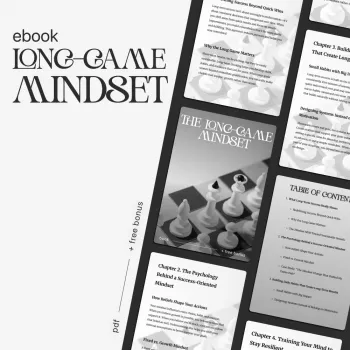
If you’re also working on consistency and resilience beyond communication moments, The Long-Game Mindset pairs well with confidence practice by reinforcing sustainable habits. And for a quick, low-stakes way to practice decisive choices (without social pressure), Using the Clothes You Already Own with AI can help you practice making clear selections and following a simple process—useful when “second-guessing” is your default pattern.
Product Details
Find the full toolkit here: Confidence Boost Action Toolkit: Unshakeable Confidence Guide + Bold Communication Checklists.
FAQ
How fast can communication confidence improve with a toolkit like this?
Many people notice improvement within days when they repeat one checklist in real situations. Deeper comfort typically builds over weeks as repetition and quick debriefs turn the steps into habits.
Will this help with boundaries at work without sounding rude?
Yes—brief, respectful boundaries are usually received better than long explanations. A calm tone, a clear limit, and (when appropriate) an alternative option help you stay firm without sounding harsh.
What if someone pushes back or ignores the boundary?
Use a simple escalation path: restate the limit once, name the next step or consequence, and disengage from circular debate. If it’s a work situation, documenting key interactions can help you stay clear and consistent.











Leave a comment