Lower Stress & Anxiety: Quick Tools and a 7-Day Calm Plan
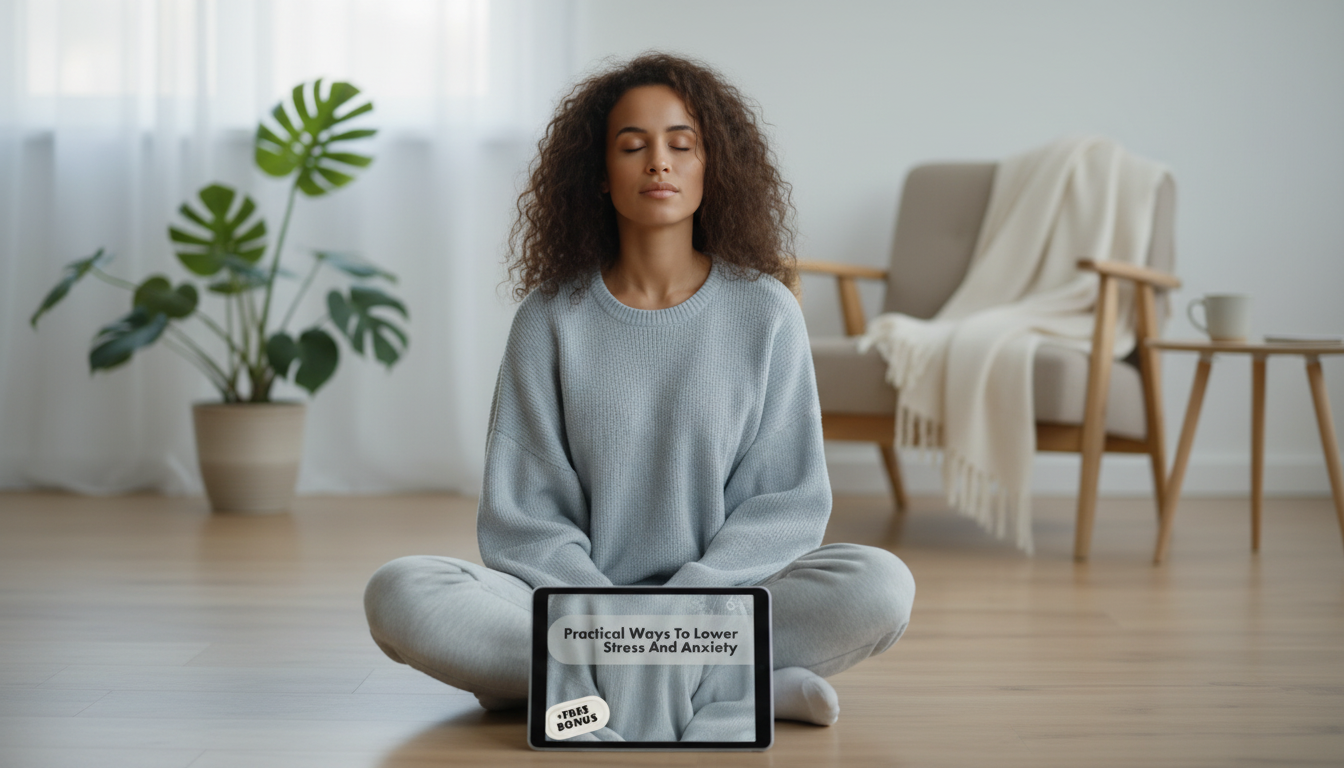
Practical Ways to Lower Stress and Anxiety for a Calmer Mind
Stress and anxiety can show up as racing thoughts, tension in the body, sleep disruption, and a constant sense of urgency. Small, repeatable habits often work better than big overhauls—especially when the goal is a calmer nervous system and more stable daily energy. Below is a practical, step-by-step structure for building relief into mornings, work hours, evenings, and stressful moments, along with a self-help eBook that organizes these tools into an easy routine.
What Stress and Anxiety Can Feel Like (and Why It Matters)
Stress and anxiety don’t always look dramatic. Often, they show up as everyday friction that slowly wears down focus and mood. Common signs include a tight chest, headaches, irritability, digestive discomfort, trouble concentrating, rumination, avoidance, and changes in sleep (either insomnia or oversleeping).
It helps to remember the basics: the body’s threat system can activate even when the “threat” is an email, deadline, conflict, uncertainty, or too much input at once. When that system stays switched on, the mind scans for more problems and the body holds tension—making small stressors feel bigger.
If symptoms interfere with work, relationships, or sleep for weeks—or if you’re dealing with panic attacks, persistent hopelessness, or thoughts of self-harm—reach out for professional support right away. For background on anxiety disorders and how they’re commonly understood, see the National Institute of Mental Health. For how stress affects the body, the American Psychological Association is also a helpful reference.
Fast Calming Tools for the Moment You Feel Overwhelmed
When anxiety spikes, the goal isn’t to “win” against your thoughts. The goal is to lower arousal first so you can think clearly again. These tools are designed to be fast, portable, and repeatable.
- Breathing reset (2–3 minutes): Use slow, exhale-focused breathing (longer exhale than inhale) to reduce activation.
- Grounding (60 seconds): Name 5 things you see, 4 you feel, 3 you hear, 2 you smell, 1 you taste to redirect attention out of spirals.
- Muscle release (2 minutes): Tense and release shoulders, jaw, and hands; scan for “hidden” tension.
- Thought labeling: Silently name what’s happening (“worrying,” “catastrophizing,” “planning”) to create distance from the thought stream.
Quick Calm Menu (Pick One When Anxiety Spikes)
| Tool | Time | Best for | How to do it |
|---|---|---|---|
| Exhale-focused breathing | 2–3 min | Racing heart, agitation | Inhale 4, exhale 6–8; repeat and soften shoulders |
| 5-4-3-2-1 grounding | 1 min | Spiraling thoughts | Name sensory details in order; keep pace slow |
| Progressive release | 2–5 min | Body tension | Tense 5 seconds, release 10 seconds; move head-to-toe |
| Worry container note | 2 min | Mental overload | Write the worry + next tiny step; schedule review later |
Daily Habits That Lower Baseline Stress (So Spikes Are Smaller)
Fast tools are great for emergencies. Daily habits reduce your baseline so you have fewer emergencies in the first place.
- Sleep basics: Keep a consistent wake time, reduce late caffeine, dim lights 60–90 minutes before bed, and use a simple wind-down ritual (same steps nightly).
- Movement as regulation: Short walks, light strength work, and stretching help discharge tension. Consistency beats intensity—especially on busy weeks.
- Nutrition and hydration: Regular meals help prevent blood-sugar crashes that can mimic anxiety sensations (shakiness, dizziness, irritability).
- Digital boundaries: Limit notifications, set email windows, and create screen-free buffers around sleep so your brain isn’t on alert all day.
If you want a simple public-health overview of coping strategies, the CDC’s stress coping guide is a practical reference.
Mind Skills: Working with Thoughts Instead of Fighting Them
Stress often escalates when the mind treats thoughts like facts. Mind skills help you respond to thoughts without getting pulled into them.
For readers who also want to build more consistent optimism and mental “bounce-back,” Bright Side Up: A Simple Guide to Getting Positive Thoughts Every Day pairs well with stress skills by focusing on daily mindset shifts that are easier to maintain when life gets busy.
Building a Simple 7-Day Calm Plan (Repeat Weekly)
Self-Help Support: Practical Ways to Lower Stress and Anxiety (eBook)
If you prefer step-by-step structure, a guided resource can make consistency much easier—especially when stress makes it hard to remember what to do next. Practical Ways to Lower Stress and Anxiety | Self-Help eBook for Calm Mind, Relaxation & Better Mental Health is designed for everyday use, with repeatable techniques for calming the mind, relaxing the body, and improving mental well-being through routines you can actually follow.
When to Consider Professional Help (and How to Combine It with Self-Help)
Recommended Digital Guides (In Stock)
- Practical Ways to Lower Stress and Anxiety | Self-Help eBook for Calm Mind, Relaxation & Better Mental Health
- Bright Side Up: A Simple Guide to Getting Positive Thoughts Every Day
FAQ
What is one practical technique that can calm anxiety quickly?
Try exhale-focused breathing: inhale for 4 seconds and exhale for 6–8 seconds for 2–3 minutes. Use it when you notice a racing heart, agitation, or that “can’t settle” feeling, and keep your shoulders relaxed as you breathe.
How long does it take to notice results from stress-reduction habits?
Quick tools like grounding or breathing can help in minutes, but lowering baseline stress usually takes days to weeks of consistent sleep, movement, and thought skills. Small daily actions tend to compound, making spikes less frequent and less intense over time.
Can a self-help eBook replace therapy?
A self-help eBook can support daily coping and skill-building, but it isn’t a substitute for professional care when symptoms are severe, persistent, or interfere with safety and functioning. Many people get the best results by using self-help routines alongside therapy or medical guidance when needed.









Leave a comment