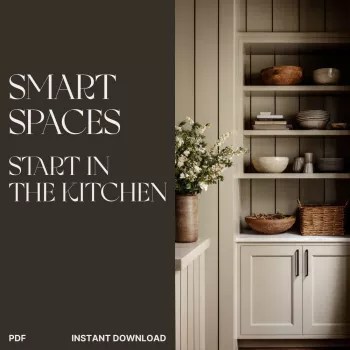
A kitchen works best when its storage supports the way you actually use it. Before buying bins or rearranging every cabinet, take a look at your daily routines, the space you have, and the items worth keeping close at hand.
Our Smart Spaces Start in the Kitchen digital guide offers a practical starting point for decluttering, organizing, and planning storage in a modern home. You can begin with one frustrating area and build a setup that makes everyday tasks easier.
Notice where you prepare food, cook, clean up, and eat. You may find that the cutting boards are far from your prep surface or that dishes require an awkward walk from the dishwasher. These small inconveniences can reveal where a change would be useful.
Look for crowded counters, drawers that stick because they are overfilled, and cabinets where useful items are hidden behind others. Consider who uses each area and whether they can comfortably reach what they need.
Before shopping for organizers, measure the usable width, depth, and height of shelves, drawers, and cabinets. Account for hinges, pipes, and other obstructions. A divider or shelf insert should fit the space and still leave enough room to remove the items around it.
We recommend working through one drawer or cabinet at a time. Empty it, group similar items, and set duplicates aside. Then decide what deserves kitchen space based on how often you use it and whether it serves a purpose you still need.
Keep frequently used tools accessible. Less-used items can go on higher shelves or in another suitable storage area. If you have several tools that perform the same task, keeping the ones you prefer can free up room without making cooking harder.
Check pantry dates and dispose of expired food safely. For guidance on food storage times, the FoodKeeper App from FoodSafety.gov can help. Wipe the cleared space before returning items, and avoid emptying the entire kitchen at once if you need it to remain usable.
Once you know what you are keeping, place items near the activity they support. Daily essentials belong in easy-to-reach spots; occasional-use pieces can occupy less convenient areas. The plan below is a starting point, not a rulebook: your layout and household routines may call for different choices.
| Item group | Suggested location | Planning tip |
|---|---|---|
| Cooking tools | Drawer or container near the cooking area | Keep the most-used tools within easy reach. |
| Pots and pans | Lower cabinet near the cooking area | Allow room to lift out heavy pieces safely. |
| Everyday dishes | Cabinet near the dishwasher or sink | Make putting clean dishes away convenient. |
| Pantry staples | Visible shelves or a dedicated cabinet | Group similar foods and check dates regularly. |
| Cleaning products | Secure storage separate from food | Keep products out of children’s reach. |
Store heavy cookware and appliances on lower shelves so you do not have to lift them overhead. Keep hazardous products secured and away from children, and leave them in their original containers. The CDC provides more advice on preventing poisoning at home.
Try your new arrangement for a few days before considering it finished. If a utensil keeps landing on the counter, it may need a more convenient home. If a cabinet is difficult to close, it may need fewer contents rather than another organizer.
Use adjustable shelves when they help match cabinet height to what you own. Drawer dividers can keep small tools from sliding together, while vertical storage may make baking sheets or cutting boards easier to retrieve. Choose these solutions only when your measurements and access needs support them.
Leave a little open space in drawers and on shelves. You need room to lift out a pan, put groceries away, or return clean dishes without rearranging everything first. An available gap also gives your kitchen some flexibility as your needs change.
In a smaller kitchen, multipurpose tools can earn their space by replacing several single-use items. A tighter limit on duplicates can help, too. Keep an extra only when it is genuinely useful and you have a sensible place to store it.
Our Smart Spaces Start in the Kitchen digital guide is a $11.99 USD download focused on decluttering, organizing, and planning kitchen storage for modern homes. It is suited to anyone who wants a practical plan rather than a collection of containers without a clear purpose.
If building consistent routines is also a priority, our Long-Term Growth: Build Habits That Last digital guide offers a separate resource on productivity and lasting habits.
Our team suggests starting with one problem area, such as an overflowing utensil drawer or a crowded pantry shelf. Make a change, use it, and adjust as your routines evolve. A useful kitchen is one you can maintain, not one that has to stay perfectly arranged.
Start with a crowded drawer or cabinet. Group similar items and decide what to keep before assigning each item a storage space.
Measure usable space and prioritize easy access to frequently used items. Consider vertical storage or dividers where they improve access without overcrowding the space.
No. Smart Spaces Start in the Kitchen is a digital download.





Leave a comment