Teen Motivation: A 7-Day Checklist That Actually Works

Why teen “laziness” is often a motivation problem in disguise
Motivation can look like defiance or apathy, especially with teen boys. But more often it’s a mix of stress, low confidence, unclear expectations, and a growing need for autonomy. The goal isn’t to “fix his attitude” in one talk—it’s to create small, repeatable wins that build momentum without turning your home into a reminder factory.
If you want a simple system you can print and use right away, The Ultimate Teen Motivation Checklist: Ignite Your Son’s Drive Step-by-Step – How to Motivate My Teenage Son is designed to help you set clear targets, shrink tasks, and follow through without constant power struggles.
Start with a simple reset: what “motivated” looks like this month
Before you change consequences or add a new routine, define the target. Vague goals (“care more,” “try harder”) create arguments because no one can prove progress.
- Pick one focus area at a time (school, chores, sleep, attitude, job search, sports) to prevent overwhelm.
- Define success in observable behaviors (example: “starts homework by 6:30 pm” vs. “tries harder”).
- Choose a time frame that fits teen development: 7 days for habits, 30 days for a bigger goal.
- Use a 3-level target: minimum (baseline), expected (daily standard), and stretch (bonus).
Keep the “minimum” truly doable on a bad day. The win is follow-through, not perfection.
The connection-first checklist (before any consequences)
Connection doesn’t mean letting things slide. It means starting from understanding so your plan matches the real obstacle—confusion, overwhelm, embarrassment, fatigue—not just the surface behavior.
- Schedule a low-pressure check-in (10–15 minutes) at a calm time—not during conflict.
- Lead with curiosity: ask what feels hard, boring, confusing, or pointless about the task.
- Reflect back what you hear to reduce defensiveness (summarize without correcting).
- Identify one barrier you can remove (missing supplies, unclear directions, too many steps, noisy workspace).
- End with a clear next step and a specific time to start—avoid long lectures.
| Situation | Try saying | Goal |
|---|---|---|
| Avoiding homework | “What part feels the most annoying to start—reading, writing, or just getting set up?” | Find the real blocker |
| Shut down or sarcasm | “This feels like a rough moment. Want a 10-minute break and then we try again?” | De-escalate without giving up |
| “I don’t care” response | “If you did care, what would you want to be different?” | Invite values without pressure |
| Repeated reminders needed | “What would make it easier to remember on your own—phone alarm, checklist, or a set routine?” | Shift responsibility with support |
Build autonomy without losing structure (the “two choices” method)
Teen boys often push back hardest when they feel controlled. You can keep boundaries while giving a sense of ownership.
- Offer two acceptable options: “Homework at 5:30 then gaming, or gaming until 6:00 then homework.”
- Keep choices real—avoid sarcastic options or threats disguised as choices.
- Let him own the trade-offs: choosing later also means a shorter leisure window.
- Use “when/then” language: “When the kitchen is reset, then you’re free.”
- Avoid negotiating during meltdowns; revisit choices when calm.
This method works best when both options are truly okay with you and the consequence is built into the schedule—not delivered as a punishment.
Motivation math: make tasks smaller and rewards more immediate
Many teens don’t fail because they can’t do the work—they fail at starting. Make “initiation” the skill you’re training.
- Turn large tasks into 10–20 minute sprints with visible endpoints (timer + single deliverable).
- Use “first step only” prompts: open the laptop, name the file, write the title, answer one question.
- Pair hard tasks with a small, immediate payoff (snack, music, short walk, 10 minutes of downtime).
- Create a “done list” (completed items) to build competence and momentum.
- If your teen struggles with initiation, prioritize starting over perfect outcomes.
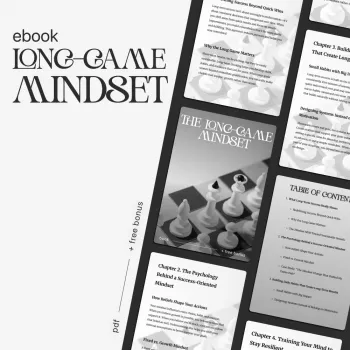
If you want a longer-range framework for building resilience and follow-through beyond the weekly reset, The Long-Game Mindset | Ebook on How to Build a Mindset for Long-Term Success, Sustainable Growth & Resilience pairs well with sprint-based routines.
Accountability that doesn’t feel like nagging
The best accountability system is boring, predictable, and brief. When accountability becomes emotional, teens learn to argue instead of act.
The 7-day “ignite drive” routine (repeatable weekly plan)
| Day | Action | What to write down |
|---|---|---|
| 1 | Pick the goal + define success | Minimum / Expected / Stretch |
| 2 | Remove a barrier | One barrier + fix |
| 3 | Two work sprints | Sprint length + result |
| 4 | Add a reward loop | Reward + trigger |
| 5 | Use two choices once | Choice A / Choice B |
| 6 | 5-minute review | What worked / What didn’t |
| 7 | Reset for next week | Keep / Change / Next goal |
When motivation problems are a signal, not defiance
For additional guidance from authoritative sources, see the American Academy of Pediatrics (HealthyChildren.org) and the American Psychological Association resources on teen stress.
A ready-to-use checklist for daily follow-through
FAQ
How do you motivate a teenage son who doesn’t care about school?
Reduce overwhelm by defining the smallest next step (one sprint, one assignment, one “first step only” action) and connect it to a short-term goal he values. Use a consistent daily check-in and involve school supports if the pattern persists.
What if every conversation turns into an argument?
Move talks to calm-time check-ins, reflect what you hear, and end with one clear next step and start time. Use predictable “when/then” structure and revisit choices later instead of negotiating during escalations.
Are rewards or consequences better for teen motivation?
Both can help: rewards build momentum for new habits, while logical consequences protect boundaries. Keep both immediate, specific, and tied to behavior rather than character.











Leave a comment