7-Day Confidence Challenge: Daily Checklist for Self-Esteem

7-Day Confidence Booster Challenge: A Simple Daily Checklist to Build Self-Esteem
Confidence often grows faster through small, repeatable actions than big “life overhauls.” A 7-day challenge creates momentum: one focused task per day, a quick reflection, and a checklist that turns progress into something visible. Below is a simple week plan you can follow in 10–20 minutes a day, plus tools for handling common self-doubt patterns and keeping your progress going after the week ends.
What “confidence” looks like in daily life (and what it isn’t)
Confidence isn’t a constant high. In real life, it’s the ability to act while uncertainty is still present. You can feel nervous and still be confident if you keep moving.
- Confidence is action with uncertainty, not the absence of fear, nerves, or awkwardness.
- Self-esteem is your ongoing relationship with your worth; confidence is often situational and skill-based (work, social settings, boundaries, etc.).
- Common myths include: confident people never feel insecure, confidence must be constant, and confidence arrives before you take the step.
- A 7-day structure helps because it reduces decision fatigue and creates quick proof that effort can change how you show up.
If you like evidence-based approaches, the week’s reflections borrow from CBT-style thinking tools (learn more from the American Psychological Association overview of Cognitive Behavioral Therapy).
How the 7-day challenge works: micro-actions + proof + repetition
The challenge is intentionally small. Each day includes (1) one micro-action that’s specific and slightly uncomfortable (but safe), and (2) a two-minute reflection that captures “proof” you can handle discomfort and follow through.
- Pick actions that are measurable (10–20 minutes, one message, one request, one finished task).
- Pair the action with a short reflection so your brain can store the evidence instead of dismissing it.
- Use a checklist to reduce overthinking and keep your week moving.
- Track simple patterns: confidence may be easier to build after movement, after a shower, early morning, or after a supportive social moment.
7-Day Confidence Checklist (overview)
| Day | Focus | Action (10–20 minutes) | Reflection (2 minutes) |
|---|---|---|---|
| 1 | Self-awareness | Name one situation that triggers self-doubt; write a kinder alternative thought | What did the inner critic say? What’s a more accurate response? |
| 2 | Body-based confidence | Do a short walk/stretch; practice a grounded posture and slow breathing | How did the body shift the mind? |
| 3 | Competence | Finish one small task you’ve been avoiding | What does finishing prove about you? |
| 4 | Self-advocacy | Ask for one small thing (clarification, help, a preference) | What happened when you spoke up? |
| 5 | Social courage | Send one message or start one brief conversation | What was the outcome vs. the fear prediction? |
| 6 | Boundaries | Say “no” or propose a compromise on one low-stakes request | What did you protect (time, energy, values)? |
| 7 | Identity + momentum | Write a “proof list” of wins from the week; choose a next-week habit | What changed most: thoughts, actions, or self-trust? |
Want the checklist in a ready-to-use format (with prompts and space to write)? The 7-Day Confidence Booster Challenge (digital download) lays out the structure so you can focus on doing the daily steps rather than setting up your own system.
Daily prompts to reduce self-doubt without forcing “positive vibes”
You don’t have to “hype yourself up” to build confidence. Neutral, reality-based self-talk often works better because it’s believable. Keep these prompts handy during the week:
- Neutral reframe: “This is hard, and I can take one step.”
- Evidence questions: “What facts support my fear? What facts don’t?”
- Replace mind-reading with curiosity: “What’s another explanation?”
- Next right step thinking: “What’s the smallest useful action I can take in the next 5 minutes?”
- Proof list (actions, not outcomes): “I sent the message” counts, even if the response is slow.
This is closely tied to self-efficacy: the belief you can influence outcomes through your actions. For a deeper look at the concept, see the NIH overview of self-efficacy and behavior change.
Common obstacles during a confidence challenge (and quick fixes)
If low self-esteem has been a long-standing struggle, practical support can help. The NHS guide to raising low self-esteem offers grounded ideas that pair well with a short challenge like this.
After day 7: turning momentum into a self-esteem routine
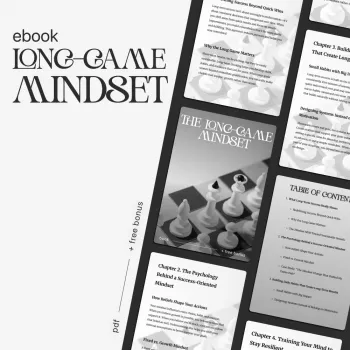
For a longer-term approach that supports patience and consistency, The Long-Game Mindset eBook pairs well with the 7-day sprint by helping you build resilience when motivation dips.
Digital download option: a printable checklist and guided prompts for the week
If you want a plug-and-play version, the 7-Day Confidence Booster Challenge | Self-Esteem Guide, Digital Download is designed for quick daily check-ins and an end-of-week proof list you can keep building.
FAQ
How long should each daily confidence task take?
Aim for 10–20 minutes per day plus a 2-minute reflection. If motivation is low, shrink the task to 5 minutes to protect consistency.
What if self-doubt gets worse when starting?
A temporary spike can happen because you’re paying closer attention. Lower the stakes, choose smaller steps, and focus on completing the action rather than trying to feel confident immediately.
Can a 7-day challenge actually improve self-esteem?
A week won’t rewrite everything, but it can create fast proof of capability and a repeatable routine. Those two ingredients support longer-term self-esteem growth when you keep practicing.











Leave a comment