Well-Behaved Dog Training Pack: 10-in-1 Digital Bundle
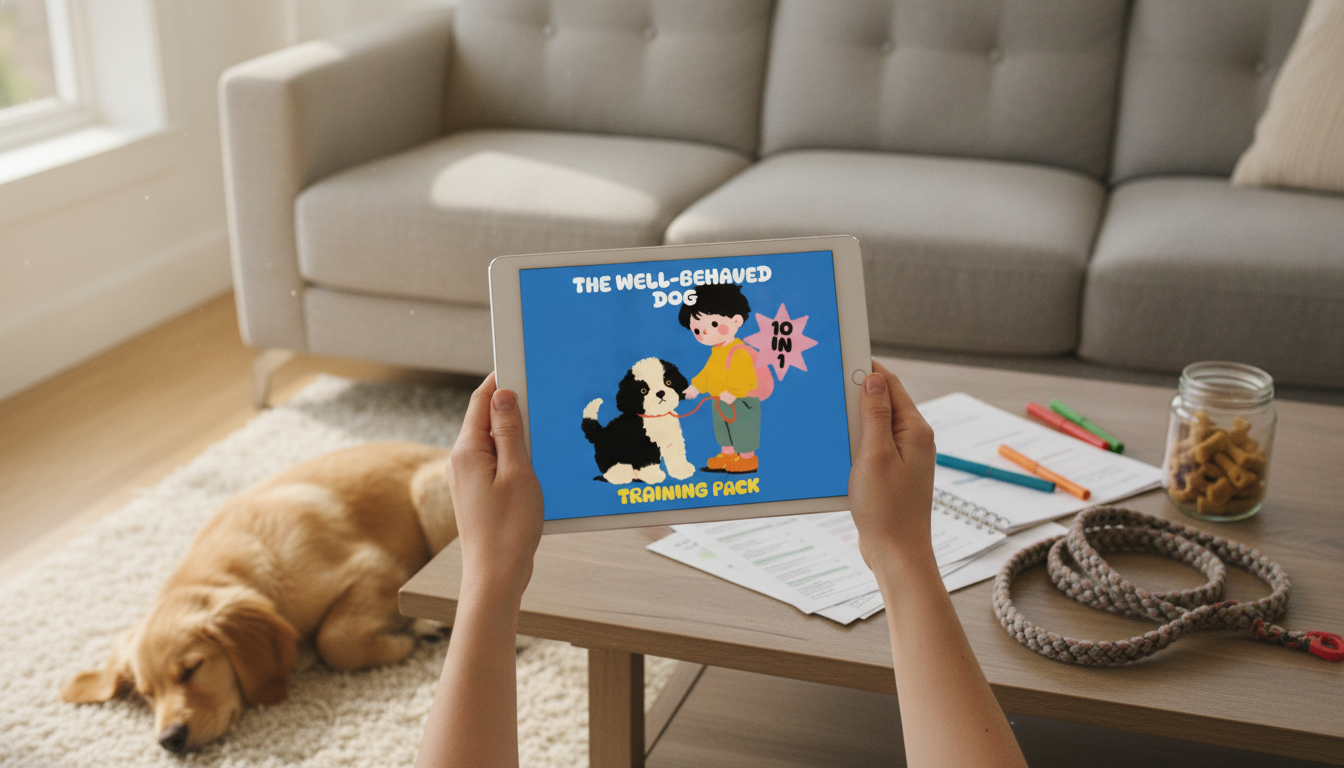
A dog that listens reliably isn’t about “being strict”—it’s about clear communication, consistent routines, and rewarding the behaviors you want. The Well-Behaved Dog Training Pack brings together step-by-step guides, eBooks, and checklists built to help everyday skills click: focus around distractions, calm greetings, loose-leash walking, and dependable cues using humane, reward-based methods.
What This 10-in-1 Training Bundle Is Designed to Do
Good manners are easier to teach when practice happens in real life, not just during “training time.” This bundle is designed to turn your normal routines into structured, repeatable lessons that your dog can understand.
- Turn daily moments (meals, doorways, walks) into structured practice sessions
- Build core cues: sit, down, stay, come, leave it, and place/settle
- Improve impulse control for jumping, pulling, barking, and overexcitement
- Create consistent house rules that all family members can follow
- Support confident behavior through predictable routines and clear rewards
Who It Helps Most (and What Results to Expect)
This pack works best for owners who want a clear plan, quick sessions, and a way to track progress without guesswork. It’s useful across ages and household setups, as long as expectations stay realistic and practice stays consistent.
- New puppy owners establishing house manners, crate routines, and bite inhibition foundations
- Adult dogs that know cues but struggle with reliability around distractions
- Multi-dog households needing shared routines and calmer transitions at doors, feeding time, and greetings
- Busy owners who do best with checklists, short sessions, and measurable milestones
- Reasonable expectations: progress is typically seen in weeks with daily practice; reliability in high-distraction environments takes longer
What’s Included in the Bundle (Guides, eBooks, and Checklists)
The pack is set up to work two ways: follow it in sequence like a day-by-day plan, or use it as a “pick the problem” library when a specific issue pops up (jumping, barking, pulling, scavenging). The checklists make it easier to stay consistent across the household—especially when different family members train in slightly different ways.
- A structured set of training references that can be used as a day-by-day plan or as a “pick the problem” library
- Printable or repeatable checklists to track consistency, rewards, and session length
- Behavior-focused lessons covering common household challenges (jumping, leash pulling, barking, counter surfing)
- Skill-building lessons that emphasize timing, reinforcement, and setting up the environment for success
- A framework for proofing skills: easy setting → mild distractions → real-world distractions
Example way to organize the 10-piece pack into a training sequence
| Bundle item (example label) | Primary focus | When to use it | Quick win to track |
|---|---|---|---|
| Guide 1: Foundations | Rewards, timing, marker cues | Day 1–3 or anytime progress stalls | Dog responds to name + looks at handler |
| Guide 2: Core Cues | Sit/down/stay/come | Week 1–2 | 3 successful reps in a row per cue |
| Guide 3: Calm at Home | Settle/place, impulse control | When routines feel chaotic | Dog relaxes on mat for 2 minutes |
| Guide 4: Leash Manners | Loose-leash walking, attention | Before longer neighborhood walks | 10 steps with a loose leash |
| Guide 5: Greetings | No jumping, polite hello | Before guests arrive | Four paws on floor during greeting |
| Guide 6: “Leave It” & Safety | Drop/leave it, trade-ups | For scavenging and household hazards | Dog disengages from item on cue |
| Guide 7: Barking & Reactivity Basics | Triggers, distance, alternatives | When barking is frequent | Dog offers a sit/look instead of barking |
| Guide 8: Household Boundaries | Doorways, counters, food manners | For counter surfing/door darting | Wait at door for 2 seconds |
| Checklist Set A | Daily sessions + rewards log | Every day | 5-minute session completed |
| Checklist Set B | Proofing plan + distraction ladder | After cues are reliable at home | Cue works in 2 new locations |
How to Use the Pack as a Simple Weekly Plan
Short, frequent sessions beat long weekend marathons. A simple rhythm is to practice one “new” skill when your dog is fresh, then do one “maintenance” skill your dog already knows so training ends on success.
Key Training Principles That Make the Checklists Work
For deeper background on humane methods, see the American Veterinary Society of Animal Behavior (AVSAB) position statements, the Humane Society’s positive reinforcement overview, and the American Kennel Club training basics.
Common Challenges and How the Bundle Helps Address Them
What to Look for in Any Digital Training Program
Product Details and Where to Get It
If a structured approach sounds like a better fit than piecing advice together from random sources, the main bundle is available here: The Well-Behaved Dog Training Pack – 10-in-1 Bundle of Guides, eBooks, and Checklists. It’s a digital format designed for repeat reference, especially when paired with short daily sessions and consistent household rules.
Two additional digital guides that can support day-to-day follow-through (especially for busy households building new routines) are: Bright Side Up: A Simple Guide to Getting Positive Thoughts Every Day and Master Return Policies & Spot Scams with Confidence on Amazon.
FAQ
Is this bundle suitable for puppies and adult dogs?
Yes. Puppies usually do best with simpler setups and shorter sessions, while adult dogs often need more proofing work around distractions. Start at an easy level and progress gradually so your dog can stay successful.
How long does it take to see better behavior?
Small improvements often show up in days to a couple weeks with daily practice. Strong reliability in distracting environments commonly takes weeks to months, depending on consistency and how long the behavior has been happening.
Does it use reward-based training?
Yes—reward-based methods, clear routines, and practical management are emphasized. Timing and consistency are key, and punishment-heavy approaches can increase fear or anxiety, which may make behavior issues worse.












Leave a comment