Watering Plants by Soil Type: Sand, Loam, Clay & Mixes
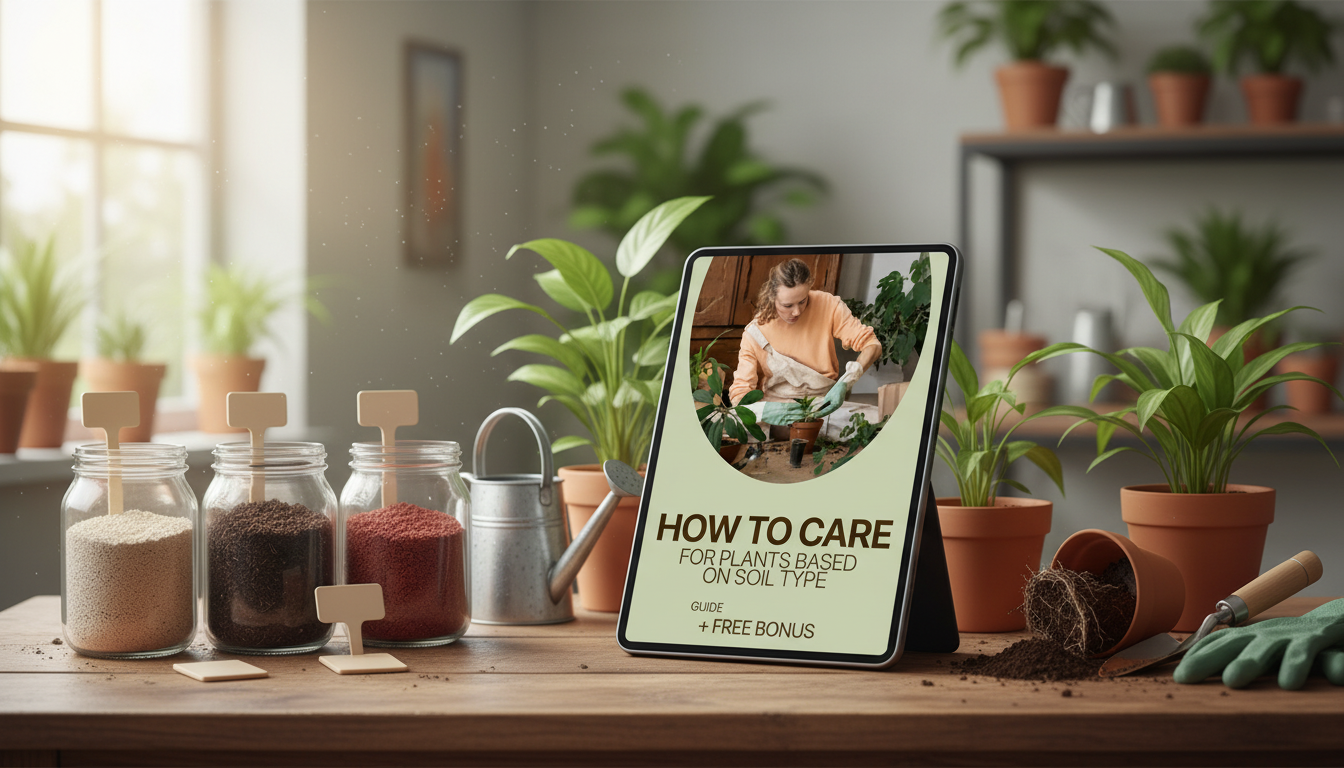
How to Care for Plants Based on Soil Type
Soil type determines how quickly water drains, how much moisture stays near roots, and how often plants need attention. Matching watering habits and soil tweaks to the texture you have (sand, loam, clay, or container mixes like potting soil) prevents common problems like root rot, fungus gnats, and chronic wilting. Once you know what your soil tends to do, you can water with intention instead of guessing.
Start with a Simple Soil-Type Check
Do a quick “squeeze test”
Dampen a small handful of soil and squeeze it. Sandy soil falls apart quickly; loam forms a soft crumb that breaks with a poke; clay forms a sticky ribbon or clod that holds its shape.
Watch how water behaves
Water the surface and observe. If it soaks in almost instantly and dries fast, you’re likely working with sand or a very airy mix. If water pools, runs off the top, or lingers for a long time, you’re likely dealing with clay, compaction, or a dense potting mix.
Use plant timing as a clue
Wilting right after watering often points to poor aeration (roots can’t access oxygen). Wilting days later often points to fast drainage (roots simply ran out of water).
For containers, identify the mix style
Potting mixes vary widely. Peat/coco-heavy blends can hold moisture and may become water-repellent if allowed to dry too far; bark-heavy mixes drain quickly and can dry unevenly; compost-rich mixes can swing either way depending on the particle size and how broken down the material is.
| Soil type | How it behaves | Watering rhythm | Best technique | Helpful amendment |
|---|---|---|---|---|
| Sandy | Drains very fast, dries quickly | More frequent, smaller doses | Slow soak; mulch top layer | Compost + coco coir |
| Loam | Balanced drainage and retention | Moderate, consistent schedule | Deep watering until runoff (containers) / 6–8 in. (beds) | Compost for steady structure |
| Clay | Holds water, compacts easily | Less frequent, deeper watering | Water slowly; avoid saturating repeatedly | Compost + gypsum (where appropriate) |
| Peat/coco potting mixes | Can become water-repellent if too dry | Water thoroughly, then allow partial dry-down | Bottom-water or re-wet gradually | Wetting agent or mix with compost |
| Bark-heavy / chunky mixes | High airflow, dries unevenly | More frequent checks | Soak-and-drain; ensure full saturation | Add fine components (coco/peat) |
Watering Methods That Match Each Soil Texture
Sandy soils: keep moisture steadier
Sandy soil drains so fast that roots can go from “fine” to “stressed” within a day in summer. Water in the morning, use drip irrigation or a slow trickle, and apply mulch to reduce evaporation. A single heavy watering often moves past the root zone too quickly; smaller, more frequent sessions tend to perform better.
Loamy soils: deep water, then pause
Loam is the “middle path” with both drainage and water-holding capacity. Water deeply and less often so roots grow downward instead of hovering near the surface. In containers, water until excess drains out; in beds, aim to moisten the top 6–8 inches depending on the plant.
Clay soils: slow down to prevent runoff
Clay can accept water slowly and hold it for a long time. Watering too fast leads to runoff, while watering too often leads to soggy conditions and low oxygen around roots. Apply water slowly (so it can infiltrate) and rely on longer intervals between sessions—even if the surface looks dry.
Container mixes: water fully, then let them breathe
Raised beds and amended soils: treat them like “engineered loam”
Smart Moisture Tips Without Overwatering
Check below the surface
Use the “lift test” for containers
Time watering to reduce waste
Skip saucer stagnation
Fix the Root Cause: Amendments and Structure Adjustments
Improve sand by adding “sponges” (organic matter)
Improve clay by building structure, not just adding water
Adjust potting mixes based on the problem
For deeper reference materials and a step-by-step routine, see How to Care for Plants Based on Soil Type – Expert Guide to Watering Plants by Soil Type, Smart Moisture Tips, and Soil-Based Plant Care.
Common Soil-Type Watering Mistakes and Fast Corrections
Mistake: watering clay frequently in small amounts
Mistake: soaking sandy soil once and assuming it will last
Mistake: watering hydrophobic peat mixes from the top only
Mistake: judging only by surface dryness
Soil-Type Care for Popular Plant Groups
Succulents and cacti
Tropical foliage plants
Herbs and vegetables
Orchids and epiphytes
Seedlings
A Simple Routine to Build Around Soil Type
Weekly
Monthly
Seasonally
If you like a structured approach to sticking with a plant-care routine, The Long-Game Mindset | Ebook on How to Build a Mindset for Long-Term Success, Sustainable Growth & Resilience can help with consistency and tracking habits through seasonal changes.
Helpful References for Soil Improvements
For more detailed soil texture and improvement guidance, consult the USDA NRCS Soil Texture Calculator and the Royal Horticultural Society guide to improving soil.
FAQ
How often should plants be watered in sandy soil?
Sandy soil drains quickly, so plants usually do better with smaller, more frequent waterings rather than one big soak. Drip irrigation and mulch help reduce evaporation, and adding compost increases water retention so moisture stays available longer.
Why do plants in clay soil look wilted even when the soil is wet?
Clay can stay wet while still starving roots of oxygen due to compaction and poor aeration, which stresses the root system and causes wilting. Water more slowly and less often, and improve structure over time with organic matter to increase air space.
What is the quickest way to tell if a potting mix is holding too much water?
If the mix is still wet several days after watering, drains slowly, smells sour, or attracts fungus gnats, it’s likely staying too moist. Improve drainage with more air-space ingredients (like perlite or bark), confirm drainage holes are open, and lengthen the time between waterings.











Leave a comment