AI Habit Tracking: Fast Feedback Loops That Stick

Habits in the Age of AI: A Smart System for Tracking, Feedback, and Consistency
Modern habit-building often fails not because motivation is missing, but because feedback loops are too slow and tracking is too inconsistent. When progress is hard to see, it’s easy to drift—especially during busy weeks. A smart habit system pairs simple behavior design with lightweight automation so progress stays visible, adjustments happen quickly, and routines survive real life. The goal isn’t to “optimize everything.” It’s to make the next best step obvious.
Why habits feel harder now (and what actually changed)
Daily life has more inputs than it used to, and that shifts how habits succeed or fail.
- Attention is fragmented: constant context switching makes it harder to rely on willpower-based routines.
- Schedules are less predictable: rigid plans break easily; flexible systems outperform strict schedules.
- Progress is often invisible: day-to-day gains are subtle, so the reward signal is weak and drop-off increases.
- AI can shorten the feedback loop: small data points (check-ins, notes, time logs) can turn into clear next steps within minutes instead of weeks.
A habit system that “talks back” with quick feedback is more likely to hold steady—especially when energy is low.
The smart habit system: cue, action, reward, and review
A reliable habit loop doesn’t demand constant motivation. It uses a stable trigger, a small action, an immediate payoff, and a scheduled review. If the loop is simple enough, it keeps working even when the week gets messy.
- Cue: choose a trigger that already happens (coffee brewing, closing your laptop, brushing teeth).
- Action: define the smallest “done” version that can be completed on the worst day.
- Reward: add an immediate payoff (checkmark, short break, music, or a visible streak).
- Review: schedule a weekly reset so the system stays adaptive instead of brittle.
- Use AI for review, not willpower: summarize patterns, obstacles, and likely adjustments based on what actually happened.
Smart habit loop with AI support
| Step | What to decide | AI-assisted help | Example |
|---|---|---|---|
| Cue | A reliable trigger | Suggest stable triggers based on daily routine description | After morning coffee |
| Action | Minimum viable habit | Rewrite goal into a 2-minute version | Write 2 sentences |
| Reward | Immediate reinforcement | Generate small reward ideas that fit constraints | Mark streak + 3-minute walk |
| Review | What to adjust weekly | Summarize wins, blockers, and propose one change | Move habit to lunch break |
For background on the habit loop concept, see The Power of Habit. For a practical lens on making habits easier to do (ability + prompt), the BJ Fogg Behavior Model is a useful reference.
Choosing what to track (less data, better decisions)
Tracking works when it leads to decisions, not when it becomes a second job.
- Track leading indicators: actions (walked, wrote, stretched) matter more than outcomes (lost weight, finished a book) because actions are controllable.
- Limit scope: track 1–3 habits at a time to avoid management overhead that kills consistency.
- Use binary tracking: done/not done covers most habits; add notes only when something breaks.
- Add one friction metric: “What got in the way?” creates fast fixes instead of guilt cycles.
If a metric doesn’t change what you do next week, it’s probably not worth collecting.
A simple AI habit-tracking workflow that takes 3 minutes a day
The point of AI here is speed: capture a tiny log, then convert it into a clear weekly adjustment.
- Daily check-in (60 seconds): mark habits done/not done; add a one-line note if missed.
- Daily reflection (60 seconds): write one sentence on what made it easier today.
- AI summary (30–60 seconds): paste notes and ask for a pattern summary plus one adjustment.
- Guardrails: constrain suggestions to one small change per week to prevent constant tinkering.
That final guardrail matters. Too many changes at once can create a new habit: endlessly rebuilding your system instead of doing the habit.
The checklist: set up habits that survive low-energy days
- Define success: specify what counts as “done” in a single sentence.
- Reduce friction: prepare your environment (lay out items, pre-fill templates, schedule reminders).
- Add if-then plans: “If I miss today, then I do the minimum version tomorrow.”
- Bundle habits: attach a new habit to an existing routine (habit stacking).
- Pre-commit to reviews: set a weekly review time and a monthly reset to retire habits that no longer fit.
If you want structure you can plug in immediately, Habits in the Age of AI: Ultimate Guide & AI Tool for Habit Tracking eBook, Checklist, and Smart Habit System combines a ready-to-use checklist with an AI-assisted review flow designed for quick daily logs.
Common failure points and quick fixes
Using AI responsibly for behavior change
A ready-to-use bundle: guide, checklist, and AI tool for habit tracking
If you prefer a lightweight system you can set up quickly and reuse every week, the Habits in the Age of AI: Ultimate Guide & AI Tool for Habit Tracking eBook, Checklist, and Smart Habit System is built around minimum versions, weekly resets, and simple metrics that keep momentum without complicated apps.
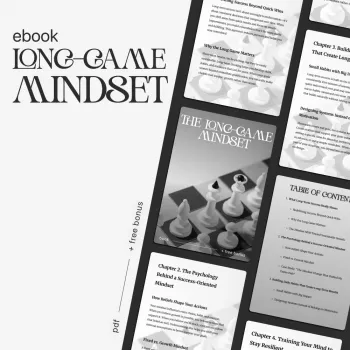
For the mindset side—staying steady when results are slow—The Long-Game Mindset pairs well with any tracking method by reinforcing sustainable expectations and resilient follow-through.
FAQ
Do AI tools replace habit apps and planners?
No. AI works best as a layer on top of simple tracking—summarizing patterns and suggesting one small adjustment—while basic checkmarks and a weekly review still do most of the heavy lifting.
How many habits should be tracked at the start?
Start with 1–3 habits. Fewer targets reduces tracking overhead and makes it easier to build consistency before adding anything new.
What if a habit is missed for several days?
Restart with the minimum version, remove one friction point, and use an if-then plan for the next day. Focus on your weekly completion rate rather than trying to “save” a streak.











Leave a comment